
Selecting the right probiotic: from strain specificity to rational clinical application
Authors:
B. Cukrowska

Authors place of work:
Department of Research and Development, Nordic Biotic Ltd., Warsaw, Poland
Published in the journal:
Gastroent Hepatol 2026; 80(4): 301-307
Category:
Klinická a experimentální gastroenterologie: přehledová práce
doi:
https://doi.org/10.48095/ccgh2026301
Summary
Research on the human microbiome has substantially increased the use of probiotics in clinical practice. Accumulating evidence indicates that probiotic effects are strain-specific and should not be generalized across microbial genera or species. Probiotic efficacy may also depend on disease phenotype, host characteristics, and functional metabolic profiles of individual strains. Recent advances in genomics, metabolomics, and other multi-omics technologies have expanded the opportunities for functional characterization of probiotic strains and for identifying biologically active metabolites involved in microbiota-host communication. Although omics approaches do not replace clinical validation, they can support the rational preclinical identification of strains with functional properties relevant to defined patient populations. This review summarizes current scientific and regulatory principles for evidence-based probiotic selection, with emphasis on strain specificity, functional characterization, omics-guided preclinical evaluation, and clinically relevant applications in gastrointestinal, allergic, respiratory, and metabolic disorders.
Keywords:
gut microbiota – dysbiosis – Genomics – Metabolomics – microbiota – probiotics – strain specificity
Introduction
The gastrointestinal tract is colonized by a highly complex microbial ecosystem that plays a central role in maintaining host health. Gut microbiota contribute to immune regulation, intestinal barrier integrity, nutrient metabolism, vitamin production, and generation of bioactive metabolites that influence multiple organs and physiological systems [1]. These metabolites are increasingly recognized as regulators of microbiota-host axes, including the gut-brain, gut-immune, gut-lung, gut-skin, gut-bone, and gut-metabolic axes [2,3].
Intestinal dysbiosis, defined as alterations in microbiota composition and/or function, may contribute to disturbances in microbiota-host communication and to the pathogenesis of numerous diseases. Dysbiosis has been associated with gastrointestinal and extraintestinal disorders, including irritable bowel syndrome (IBS), inflammatory bowel disease, allergic diseases, respiratory tract infections, osteoporosis, obesity, metabolic disorders, and neuropsychological conditions [4]. Growing understanding of the role of intestinal microbiota in human health and disease has stimulated interest in microbiota-modulating strategies, among which probiotics remain one of the most extensively investigated approaches.
According to the International Scientific Association for Probiotics and Prebiotics (ISAPP), probiotics are defined as “live microorganisms which, when administered in adequate amounts, confer a health benefit on the host” [5]. This definition is consistent with the original FAO/WHO concept emphasizing the need for scientific validation and appropriate characterization of probiotic strains [6]. Although probiotics are commonly perceived as generally beneficial and safe, current evidence indicates that effects cannot be generalized across all strains or products. Clinical efficacy depends not only on microbial species, but primarily on the individual probiotic strain, disease indication, target population, and therapeutic objective [7]. Accordingly, modern probiotic therapy requires an evidence-based and clinically oriented approach. Appropriate selection should consider strain-specific clinical evidence, disease indication, patient phenotype, functional properties of the strain, and product quality and safety.
Current requirements for high-quality probiotics
Guidance from the ISAPP, FAO/WHO, World Gastroenterology Organization (WGO), and European Federation of Associations of Health Product Manufacturers (EHPM) emphasizes several essential criteria that probiotic products should meet before being recommended for human use [5,6,8–10].
Probiotic strains should be identified at the genus, species, and strain levels; demonstrate documented safety for the intended use; provide clinically documented health benefits; maintain adequate viability throughout shelf life; and, preferably, be deposited in recognized culture collections. Precise strain identification is particularly important because probiotic effects are usually strain--specific and cannot be extrapolated between strains, even within the same species.
Contemporary probiotic evaluation increasingly includes genomic characterization. European guidance emphasizes that whole-genome sequencing and annotation are important for accurate strain identification, safety assessment, and functional characterization [9].
Safety assessment is particularly important because probiotics are often administered to vulnerable populations, including infants, older adults, and immunocompromised individuals. Current safety frameworks therefore require demonstration of the absence of virulence factors, toxin production, pathogenicity, transferable antibiotic-resistance genes, and relevant genetic instability.
Technological properties also influence probiotic quality and clinical effectiveness. Effective probiotic strains should tolerate gastric acidity, bile salts, and digestive enzymes, while remaining viable during manufacturing and storage [11].
Quality of the final product may be as important as the biological properties of the strain itself. Inadequate storage conditions, insufficient manufacturing control, or reduced viability at the end of shelf life may substantially compromise clinical efficacy.
Why strain specificity matters in clinical practice
Strain specificity is one of the central principles of modern probiotic science. Although certain general properties may be attributed to probiotics as a broad category, clinical effects are usually strain-dependent [5]. A systematic review by McFarland et al. (2018) [7], which evaluated more than 200 randomized controlled trials, demonstrated that probiotic efficacy is both strain - and disease-specific. The authors emphasized that clinical recommendations should be based on individual strains rather than on probiotic species or genera. This principle has major implications for clinical practice because many commercially available products contain incompletely characterized strains or lack disease-specific clinical evidence.
Clinical response may also depend on disease phenotype, dominant symptom profile, immune status, microbiota composition, age, and comorbidities. Consequently, probiotics should not be regarded as interchangeable products. Instead, probiotic selection should increasingly rely on matching a specific strain with a clearly defined target population and therapeutic objective.
This concept is particularly relevant in heterogeneous disorders such as IBS and allergic diseases, in which different probiotic strains may exhibit distinct therapeutic profiles [12,13].
Functional and omics-guided characterization of probiotic strains
Recent developments in genomics, metabolomics, transcriptomics, and systems biology have introduced a functional perspective into probiotic research [14]. Traditionally, probiotics were classified mainly according to taxonomy. Contemporary research increasingly focuses on the functional properties, metabolic activity, and potential mechanisms of action of individual strains [15].
Probiotic-derived metabolites, including short-chain fatty acids, lactate, amino-acid derivatives, polyamines, bile-acid metabolites, and neurotransmitter-associated compounds, are recognized as important mediators of microbiota-host communication [15,16]. These metabolites can influence epithelial integrity, immune regulation, neuroinflammation, brain function, and systemic metabolic homeostasis through multiple microbiota-gut-organ axes.
In this context, omics technologies can support the preclinical identification of strains with functional properties potentially relevant to specific disease mechanisms or patient populations. For example, genomic analyses of Lactiplantibacillus plantarum LP140 and Lacticaseibacillus paracasei LPC120 revealed metabolic pathways potentially associated with lactate production and calcium bioavailability, supporting further evaluation of these strains in bone-health applications [17,18]. Recent comparative genomic and metabolomic analyses provided a strain--resolved framework for evaluating microbial candidates for gut-brain-axis-oriented research [19]. In that study, Lactiplantibacillus plantarum LP140 and Bifidobacterium breve BB010 displayed distinct and potentially complementary strain-specific metabolic profiles: LP140 showed a stronger glutamate-gamma--aminobutyric acid (GABA) and fermentation-associated signature, whereas BB010 showed a stronger vitamin B3-associated and selective amino-acid-remodeling profile. However, functional predictions derived from omics analyses remain hypothesis-generating and cannot be considered evidence of clinical efficacy without confirmation in human intervention studies.
Thus, omics technologies should currently be viewed as tools that support preclinical characterization and strain prioritization. Clinical efficacy must still be demonstrated in well-designed randomized controlled trials performed in relevant target populations.
Clinical applications of strain-specific probiotics
Functional gastrointestinal disorders
Functional gastrointestinal disorders, now commonly referred to as disorders of gut-brain interaction, include IBS, functional dyspepsia, functional constipation, and functional diarrhea [20]. Among these conditions, IBS remains the most extensively studied indication for probiotic therapy.
Randomized controlled trials and meta-analyses suggest that both single-strain and multi-strain probiotics can improve global IBS symptoms, abdominal pain, bloating, and bowel habits [21,22]. Beneficial effects have been reported for strains such as Bifidobacterium infantis 35624, Lactiplantibacillus plantarum 299v, Saccharomyces cerevisiae CNCM I-3856, Bifidobacterium lactis BI040, and Bacillus coagulans Unique IS2, as well as for clinically evaluated multi-strain formulations containing mainly Lactobacillus and Bifidobacterium species.
Despite the large number of clinical studies, results remain heterogeneous and sometimes inconsistent. This variability may reflect the substantial heterogeneity of IBS, in which dominant symptoms and underlying pathophysiological mechanisms differ between patients. A clinically relevant example is the randomized, placebo-controlled, three-arm study by Skrzydło-Radomańska et al. (2023) [12] in adults with IBS. In that study, Bifidobacterium lactis BI040 primarily improved abdominal pain, stool consistency, and bowel habits, whereas Bacillus coagulans BC300 was more strongly associated with reduced intestinal discomfort.
Gluten-related disorders
Growing evidence suggests that gut microbiota may contribute to the pathophysiology of celiac disease and other gluten-related disorders. A recent systematic review and meta-analysis by Mozafarybazargany et al. (2023) [23] reported that probiotic supplementation in pediatric patients with celiac disease may support gluten-free-diet therapy by improving gastrointestinal symptoms and modulating gut microbiota composition. However, the authors emphasized that available evidence remains heterogeneous and that further studies using well-characterized strains are needed.
A substantial proportion of patients with celiac disease continues to experience gastrointestinal symptoms despite adherence to a gluten-free diet [24]. Persistent symptoms may result not only from inadvertent gluten exposure, which can occur even among patients following a strict gluten-free diet [25], but also from persistent intestinal dysbiosis and altered microbiome functionality [26]. Consequently, attention has turned to probiotic strains that may modulate gut microbiota composition and inflammatory responses, and in selected cases, degrade immunogenic gluten peptides involved in celiac disease pathogenesis. In this context, omics-based and functional characterization may facilitate identification of strains with enzymatic activities relevant to gluten metabolism. Leszczyńska et al. (2024) [27] identified three probiotic strains – Lacticaseibacillus casei LC130, Lacticaseibacillus paracasei LPC100, and Streptococcus thermophilus ST250 – capable of hydrolyzing immunogenic gluten peptides. Genomic analysis revealed genes encoding endopeptidases potentially involved in the degradation of proline-rich gluten-derived peptides associated with celiac disease pathogenesis. Whether these activities translate into clinically meaningful reductions in gluten immunogenicity in patients remains to be established. These findings illustrate how genomic and functional characterization can support the preclinical identification of strains with potential relevance for gluten-related disorders.
Nevertheless, current evidence is insufficient to support probiotics as a replacement for a gluten-free diet. Probiotics should therefore be regarded as adjunctive, rather than primary, therapy in celiac disease [28].
Allergic diseases
Interest in probiotics in allergic diseases was initially focused on primary prevention of atopic disorders in high-risk children. Pioneering studies by Isolauri and colleagues showed that administration of Lacticaseibacillus rhamnosus GG to pregnant women, followed by postnatal supplementation in infants during the first six months of life, reduced the incidence of atopic dermatitis in children who are at a high risk of allergies [29]. Based on accumulating evidence, the World Allergy Organization (WAO) guidelines suggested that selected probiotic strains might be considered for the prevention of allergic disease in high-risk children, particularly for eczema prevention [30].
Beyond prevention, probiotics have also been investigated as adjunctive therapy in allergic diseases. Several randomized controlled trials and meta-analyses suggest that well-characterized probiotic strains may improve symptoms and disease severity in atopic dermatitis, although clinical results remain heterogeneous [31,32]. This variability may partly reflect differences in immunological phenotype, particularly IgE sensitization status. One of the first studies suggesting a phenotype-dependent probiotic response was a trial by Viljanen et al. (2005) [13], which demonstrated that the beneficial effects of Lacticaseibacillus rhamnosus GG in infants with atopic eczema and cow‘s--milk allergy were more pronounced in IgE-sensitized children. Similar observations were later reported by Cukrowska et al. (2021) [33], who demonstrated that a probiotic mixture containing Lactobacillus rhamnosus ŁOCK0900, Lactobacillus rhamnosus ŁOCK0908, and Lactobacillus casei ŁOCK0918 improved clinical symptoms in children with atopic dermatitis and cow‘s-milk-protein allergy, particularly in patients with IgE-dependent allergy.
These findings support the concept that probiotic therapy in allergic diseases may require stratification according to disease phenotype and immunological profile.
Respiratory tract infections
The gut-lung axis represents an important pathway linking intestinal microbiota with respiratory immunity. Gut microbiota and microbial metabolites can influence systemic immune responses, mucosal immunity, antiviral defense mechanisms, and inflammatory regulation in the respiratory tract [2].
Randomized controlled trials and meta-analyses suggest that certain probiotics may reduce the incidence, duration, and severity of upper respiratory tract infections through modulation of innate and adaptive immune responses [34]. Beneficial effects in the prevention or attenuation of respiratory symptoms have been reported for strains such as Lacticaseibacillus rhamnosus GG, Lacticaseibacillus paracasei CNCM I-1518, Bifidobacterium animalis subsp. lactis BB-12, and Lactobacillus acidophilus NCFM, as well as for clinically evaluated multi-strain formulations containing mainly Lactobacillus and Bifidobacterium species [35–37].
During the covid-19 pandemic, increasing attention was directed toward the immunomodulatory potential of probiotics and their possible role in supporting recovery after SARS--CoV-2 infection. Kolesnyk et al. (2024) [38] demonstrated that supplementation with a multi-strain probiotic preparation containing Bifidobacterium lactis BI040, Bifidobacterium longum BL020, Lacticaseibacillus rhamnosus LR110, Lacticaseibacillus casei LC130, and Lactobacillus acidophilus LA120 reduced symptom severity and improved recovery in patients with symptomatic respiratory tract infections, including covid-19. This intervention was also associated with enhanced humoral immune responses against viral antigens.
These findings support the concept that specific probiotic strains may modulate respiratory immunity through gut-lung-axis interactions; however, further strain-specific clinical studies remain necessary.
Osteoporosis and bone health
The gut-bone axis has recently attracted considerable scientific attention. Experimental and clinical studies suggest that intestinal microbiota can influence bone metabolism through modulation of inflammation, calcium absorption, immune signaling, and microbial metabolites that affect osteoclast and osteoblast activity [39].
Several randomized controlled trials and meta-analyses indicate that certain probiotics may positively influence bone mineral density and bone-turnover markers, particularly in postmenopausal women [40,41]. Beneficial effects on bone metabolism have been reported for strains such as Limosilactobacillus reuteri ATCC PTA 6475, Lacticaseibacillus paracasei, Lactiplantibacillus plantarum, and clinically evaluated multi-strain formulations containing mainly Lactobacillus and Bifidobacterium species. Supplementation with Lactobacillus reuteri ATCC PTA 6475 reduced bone loss and improved bone-related metabolic parameters in older women with low bone mineral density [42,43]. More recently, a randomized clinical trial evaluating long-term supplementation with Limosilactobacillus reuteri 6475 in early postmenopausal women suggested that probiotic effects might also depend on host-related factors, including hormonal status and disease stage [44]. A multicenter, placebo-controlled study showed that long-term supplementation with Lacticaseibacillus paracasei LPC100 and Lactiplantibacillus plantarum LP140 contributed to maintenance of lumbar-spine bone mineral density and prevention of vitamin D decline in postmenopausal women [45]. These strains were selected for clinical evaluation following preclinical characterization that suggested potential relevance for bone-health applications [17,18].
Collectively, these findings supportthe concept that specific probiotic strains may influence bone metabolism through microbiota-dependent and immunometabolic mechanisms, although further strain-specific clinical studies are needed.
Practical approach to probiotic selection in clinical practice
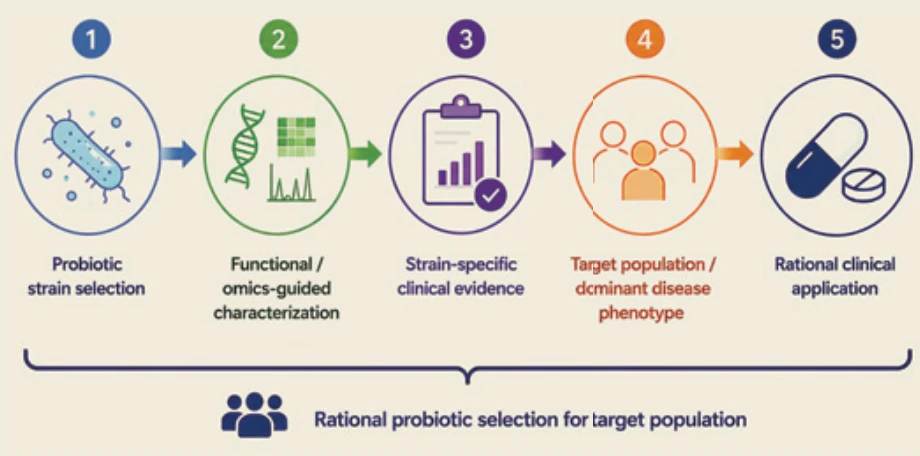
In clinical practice, probiotic selection should be based on the following principles:
selection of probiotic strains identified at the strain level and supported by clinical evidence obtained in the relevant indication;
assessment of product quality, including viability throughout shelf life, manufacturing standards, storage stability, and documented safety;
preference for strains with well-characterized functional properties and plausible mechanisms of action relevant to the target population;
consideration of preclinical functional and omics-based analyses as supportive evidence for the biological rationale of strain selection;
clear definition of the disease indication, therapeutic objective, and target population or dominant disease phenotype.
Clinicians should preferentially recommend probiotic strains whose efficacy and safety have been confirmed in well--designed clinical studies, ideally randomized controlled trials.
A conceptual framework for rational probiotic selection in clinical practice is presented in Scheme 1.
Conclusion
The available evidence demonstrates that probiotic efficacy and safety are strain-specific and disease-specific; therefore, probiotics should not be regarded as interchangeable products. Rational probiotic selection should integrate strain-specific clinical evidence,disease indication, target population, product quality, and functional characterization.
Recent developments in genomics and other omics technologies provide additional tools for functional characterization and preclinical selection of strains with potential relevance to specific clinical applications. At the same time, growing knowledge of microbiota-host interactions supports a more rational and phenotype-oriented approach to probiotic therapy.
Nevertheless, clinical recommendations should continue to prioritize strains whose efficacy and safety have been confirmed in well-designed human studies, preferably randomized controlled trials. Future integration of clinical phenotyping, microbiome profiling, and functional characterization of probiotic strains could facilitate more personalized approaches to microbiota-based interventions.
Submitted/Doručeno: 8. 6. 2026
Accepted/Přijato: 18. 6. 2026
Corresponding author
Prof. Bożena Cukrowska, MD, PhD
Department of Research and Development
Nordic Biotic Ltd.
Złota 59 St.
00-120 Warsaw
Poland
bc@nordicbiotic.com
Zdroje
1. Malard F, Doré J, Gaugler B et al. Introduction to host microbiome symbiosis in health and disease. Mucosal Immunol 2021; 14 (3): 547–554. doi: 10.1038/s41385-020-00365-4.
2. Anand S, Mande SS. Diet, microbiota and gut-lung connection. Front Microbiol 2018; 9 : 2147. doi: 10.3389/fmicb.2018.02147.
3. Marco ML, Cunningham M, Bischoff SC et al. The International Scientific Association for Probiotics and Prebiotics (ISAPP) consensus statement on the definition and scope of gut health. Nat Rev Gastroenterol Hepatol 2026; 23 (5): 432–448. doi: 10.1038/s41575-026-01176-x.
4. Origüela V, Lopez-Zaplana A. Gut microbiota: an immersion in dysbiosis, associated pathologies, and probiotics. Microorganisms 2025; 13 (5): 1084. doi: 10.3390/microorganisms13051084.
5. Hill C, Guarner F, Reid G et al. The International Scientific Association for Probiotics and Prebiotics consensus statement on the scope and appropriate use of the term probiotic. Nat Rev Gastroenterol Hepatol 2014; 11 (8): 506–514. doi: 10.1038/nrgastro.2014.66.
6. FAO/WHO. Guidelines for the Evaluation of Probiotics in Food. Report of a Joint FAO/WHO Working Group. London, Ontario, Canada. 2002 [online]. Available from: https: //www.fao.org/3/a0512e/a0512e.pdf.
7. McFarland LV, Dublin S. Meta-analysis of probiotics for the treatment of irritable bowel syndrome. World J Gastroenterol. 2008; 14 (17): 2650–2661. doi: 10.3748/wjg.14.2650.
8. ISAPP. ISAPP Position Statement on Minimum Criteria for Harmonizing Global Regulatory Approaches for Probiotics in Foods and Supplements. 2018 [online]. Available from: https: //isappscience.org/wp-content/uploads/2019/04/ISAPP-Probiotic-guidelines.pdf.
9. EHPM Probiotic Guidelines 2022. European Federation of Associations of Health Product Manufacturers (EHPM). 2022 [online]. Available from: https: //ehpm.org/wp-content/uploads/2022/09/EHPM-Probiotic-Guidelines.pdf.
10. World Gastroenterology Organisation. WGO Global Guidelines: Probiotics and Prebiotics. 2023 [online]. Available from: https: //www.worldgastroenterology.org/guidelines/global-guidelines/probiotics-and-prebiotics.
11. Uhegwu CC, Anumudu CK. Probiotic potential of traditional and emerging microbial strains in functional foods. Microorganisms 2025; 13 (11): 2521. doi: 10.3390/micro-organisms13112521.
12. Skrzydło-Radomańska B, Prozorow-Król B, Kurzeja-Mirosław A et al. The efficacy and safety of single-strain probiotic formulations containing Bifidobacterium lactis or Bacillus coagulans in adult patients with irritable bowel syndrome. J Clin Med 2023; 12 (14): 4838. doi: 10.3390/jcm12144838.
13. Viljanen M, Savilahti E, Haahtela T et al. Probiotics in the treatment of atopic eczema/dermatitis syndrome in infants: a double-blind placebo-controlled trial. Allergy 2005; 60 (4): 494–500. doi: 10.1111/j.1398-9995.2004.00514.x.
14. Chen Y, Xing Z, Sheng J et al. Trends in the Application of Multiomics Based on Machine Learning in the Development of Probiotics. J Agric Food Chem. 2026; 74 (10): 8070-8084. doi: 10.1021/acs.jafc.5c15387.
15. Pattapulavar V, Ramanujam S, Kini B et al. Probiotic-derived postbiotics: a perspective on next-generation therapeutics. Front Nutr 2025; 12 : 1624539. doi: 10.3389/fnut.2025.1624539.
16. Zhang H, Zhang S, Zhu J. Molecular-level host-microbe interactions: mechanisms, molecules, and modeling toward precision probiotics. Expert Opin Ther Targets 2026; 15 (1): 1–19. doi: 10.1080/14728222.2026.2671689.
17. Szczepankowska A, Cukrowska B, Aleksandrzak-Piekarczyk T. Complete genome sequence of a potentially probiotic cheese isolate Lactiplantibacillus plantarum LP140 from the NORDBIOTIC collection. Microbiol Resour Announc 2024; 13 (11): e00606-24. doi: 10.1128/mra.00606-24.
18. Szczepankowska AK, Cukrowska B, Aleksandrzak-Piekarczyk T. Complete genome sequence of the probiotic Lacticaseibacillus paracasei LPC100 strain from the NORDBIOTIC collection isolated from a human fecal sample. Microbiol Resour Announc. 2024; 13 (8): e00344-24. doi: 10.1128/mra.00344-24.
19. Aleksandrzak-Piekarczyk T, Szczepankowska AK, Radkiewicz M et al. Comparative genomic and metabolomic characterization of Lactiplantibacillus plantarum LP140 and Bifidobacterium breve BB010 reveals distinct extracellular metabolic signatures with potential relevance to gut-brain axis-associated functions. 2026 [online]. Research Square. Available from: https: //doi.org/10.21203/rs.3.rs-9465199/v1. Online Ahead of Print.
20. Drossman DA, Hasler WL. Rome IV-Functional GI Disorders: Disorders of Gut-Brain Interaction. Gastroenterology 2016; 150 (6): 1257–1261. doi: 10.1053/j.gastro.2016.03.035.
21. Ford AC, Harris LA, Lacy BE et al. Systematic review with meta-analysis: the efficacy of probiotics in irritable bowel syndrome. Aliment Pharmacol Ther 2018; 48 (10): 1044–1060. doi: 10.1111/apt.15001.
22. Maslennikov R, Gosteeva E, Ananeva V et al. Strain-specific systematic review with meta-analysis of probiotics efficacy in the treatment of irritable bowel syndrome. J Clin Med. 2026; 15 (3): 1152. doi: 10.3390/jcm15031152.
23. Mozafarybazargany M, Khonsari M, Sokoty L et al. The effects of probiotics on gastrointestinal symptoms and microbiota in patients with celiac disease: a systematic review and meta-analysis on clinical trials. Clin Exp Med 2023; 23 (6): 2773–2788. doi: 10.1007/s10238-022-00987-x.
24. Majsiak E, Choina M, Gray AM et al. Clinical Manifestation and Diagnostic Process of Celiac Disease in Poland-Comparison of Pediatric and Adult Patients in Retrospective Study. Nutrients 2022; 14 (3): 491. doi: 10.3390/nu14030491.
25. Vargas FM, Cardoso LT, Didoné A et al. Celiac Disease: Risks of Cross-Contamination and Strategies for Gluten Removal in Food Environments. Int J Environ Res Public Health 2024; 24 : 21 (2): 124. doi: 10.3390/ijerph21020124.
26. Marcos-Zambrano LJ, Lacruz-Pegueroles M, Aguilar-Aguilar E et al. Microbiome gut community structure and functionality are associated with symptom severity in non-responsive celiac disease patients undergoing a gluten-free diet. mSystems 2025; 10 (7): e0014325. doi: 10.1128/msystems.00143-25.
27. Leszczyńska J, Szczepankowska AK, Majak I et al. Reducing immunoreactivity of gluten peptides by probiotic lactic acid bacteria for dietary management of gluten-related diseases. Nutrients 2024; 16 (7): 976. doi: 10.3390/nu16070976.
28. Ait Said H, Elmoumou L, Rherissi B et al. Probiotics: a supplement to the gluten-free diet in celiac disease. Gastroenterol Hepatol Bed Bench 2025; 18 (3): 301–308. doi: 10.22037/ghf bb.v18i3.3152.
29. Kalliomäki M, Salminen S, Arvilommi H et al. Probiotics in primary prevention of atopic disease: a randomised placebo-controlled trial. Lancet 2001; 357 (9262): 1076–1079. doi: 10.1016/S0140-6736 (00) 04259-8.
30. Fiocchi A, Pawankar R, Cuello-Garcia C et al. World Allergy Organization-McMaster University Guidelines for Allergic Disease Prevention (GLAD-P): Probiotics. World Allergy Organ J 2015; 8 (1): 4. doi: 10.1186/s40413-015-0055-2.
31. Thomas J, Sachdeva M, Dhar S et al. Delphi consensus statement on the role of probiotics in the treatment of atopic dermatitis. Cureus 2024; 16 (7): e64583. doi: 10.7759/cureus.64583.
32. Kim K, Lee E, Kim M et al. Therapeutic effectiveness of probiotics for atopic dermatitis: A systematic review and meta-analysis of randomized controlled trials with subgroup analysis. Asian Pac J Allergy Immunol 2025; 43 (3): 428–438. doi: 10.12932/AP-280323-1576.
33. Cukrowska B, Ceregra A, Maciorkowska E et al. The Effectiveness of Probiotic Lactobacillus rhamnosus and Lactobacillus casei Strains in Children with Atopic Dermatitis and Cow‘s Milk Protein Allergy: A Multicenter, Randomized, Double Blind, Placebo Controlled Study. Nutrients 2021; 13 (4): 1169. doi: 10.3390/nu13041169.
34. Zhao Y, Dong BR, Hao Q. Probiotics for preventing acute upper respiratory tract infections. Cochrane Database Syst Rev 2022; 8: CD006895. doi: 10.1002/14651858.
35. Lei WT, Shih PC, Liu SJ et al. Effect of probiotics and prebiotics on immune response to influenza vaccination and the incidence of influenza-like illness in adults: a systematic review and meta-analysis. Nutrients 2017; 9 (11): 1175. doi: 10.3390/nu9111175.
36. King S, Glanville J, Sanders ME et al. Effectiveness of probiotics on the duration of illness in healthy children and adults who develop common acute respiratory infectious conditions: a systematic review and meta-analysis. Br J Nutr 2014; 112 (1): 41–54. doi: 10.1017/S0007114514000075.
37. Hao Q, Dong BR, Wu T. Probiotics for preventing acute upper respiratory tract infections. Cochrane Database Syst Rev 2015; 2: CD006895. doi: 10.1002/14651858.CD006895.pub3.
38. Kolesnyk PO, Paliy IH, Sydorchuk LP et al. The role of nutritional support with probiotics in outpatients with symptomatic acute respiratory tract infections: a multicenter, randomized, double-blind, placebo-controlled dietary study. BMC Nutr 2024; 10 (1): 4. doi: 10.1186/s40795-023-00799-6.
39. Lyu Z, Hu Y, Guo Y et al. Modulation of bone remodeling by the gut microbiota: a new therapy for osteoporosis. Bone Res 2023; 11 (1): 31. doi: 10.1038/s41413-023-00264-x.
40. Jafarnejad S, Djafarian K, Fazeli MR et al. Effects of a Multispecies Probiotic Supplement on Bone Health in Osteopenic Postmenopausal Women: A Randomized, Double-blind, Controlled Trial. J Am Coll Nutr 2017; 36 (7): 497–506. doi: 10.1080/07315724.2017.1318724.
41. Wang Y, Xie Y, Li J et al. Probiotics and bone health: systematic review and meta-analysis of randomized controlled trials. Front Nutr 2023; 10 : 1189455. doi: 10.3389/fnut.2023.1115069.
42. Nilsson AG, Sundh D, Bäckhed F et al. Lactobacillus reuteri reduces bone loss in older women with low bone mineral density: a randomized, placebo-controlled, double-blind clinical trial. J Intern Med 2018; 284 (3): 307–317. doi: 10.1111/joim.12805.
43. Li P, Ji B, Luo H et al. One-year supplementation with Lactobacillus reuteri ATCC PTA 6475 counteracts a degradation of gut microbiota in older women with low bone mineral density. NPJ Biofilms Microbiomes. 2022; 8 (1): 84. doi: 10.1038/s41522-022-00348-2.
44. Gregori G, Pivodic A, Magnusson P et al. Limosilactobacillus reuteri 6475 and prevention of early postmenopausal bone loss: a randomized clinical trial. JAMA Netw Open 2024; 7 (6): e2415455. doi: 10.1001/jamanetworkopen.2024.15455.
45. Głogowska-Szeląg J, Palka-Kisielowska I, Porawska W et al. The Effect of Lacticaseibacillus paracasei LPC100 and Lactiplantibacillus plantarum LP140 on Bone Mineral Density in Postmenopausal Women: A Multicenter, Randomized, Placebo-Controlled Study. J Clin Med 2024; 13 (19): 5977. doi: 10.3390/jcm13195977.
Štítky
Dětská gastroenterologie Gastroenterologie a hepatologie Chirurgie všeobecnáČlánek vyšel v časopise
Gastroenterologie a hepatologie
2026 Číslo 4
- VIDEO: Antibiotická léčba infekcí vyvolaných MDR bakteriemi – záznam semináře
- Kazuistika: Divertikulitida vs. Crohnova nemoc
- Idiopatické střevní záněty jsou spojeny se zvýšenou standardizovanou mortalitou
- Těhotenství a idiopatické střevní záněty – terapie zlepšuje stav a je bezpečná
- Vliv těhotenství na klinickou aktivitu Crohnovy nemoci
Nejčtenější v tomto čísle
- Výběr správného probiotika: od specifičnosti kmenů k racionálnímu klinickému využití
- Klinická a experimentální gastroenterologie
- Ťažká anémia vyvolaná upadacitinibom u pacienta s multirefraktérnou Crohnovou chorobou – kazuistika
- Farmakologická léčba obezity u kandidátů transplantace jater: první zkušenosti