
Is the risk of venous thromboembolic disease truly an absolute contraindication for menopause hormone therapy?
Authors:
Tomáš Fait 1,2
 ; S. Šimková 1
; V. Dvořáková 2
Authors place of work:
Department of Gynecology and Obstetrics, 2nd Faculty of Medicine, Charles University Prague and Motol and Homolka University Hospital, Prague
1; Department of Health Care Studies, College of Polytechnics, Jihlava
2
Published in the journal:
Ceska Gynekol 2026; 91(5): 408-416
Category:
Přehledová práce
doi:
https://doi.org/10.48095/cccg2026408
Summary
Oral menopause hormone therapy (MHT) is associated with a two - to four-fold increased risk of venous thromboembolism (VTE). According to the majority of studies, the increased risk of venous thromboembolic disease does not apply to transdermal administration. Transdermal MHT is considered safe even in women at a high risk of thromboembolic disease (such as those with overweight, obesity, thrombophilic conditions, recent surgery, immobilization, varicose veins, malignancy, or smoking). Acute VTE represents an absolute contraindication to both oral and transdermal administration of MHT. A personal history of VTE is an absolute contraindication to oral MHT, but only a relative contraindication for the transdermal route of MHT. Menopause hormone therapy must be personalized for each woman.
Keywords:
overweight – menopause hormone therapy – transdermal application – venous thromboembolic disease – thrombophilic mutation – chronic estrogen deficiency
Introduction
Menopause hormone therapy is associated with an increased risk of venous thromboembolic disease. An acute venous thromboembolic event is a clear contraindication to all forms of menopause hormone therapy.
But what about thrombophilic mutations and personal history of venous thromboembolism? Is it the same for all types of menopause hormone therapy? The number of women with known thrombophilic mutations is increasing due to widespread use of genetic testing. On the contrary, the aging of the population is connected with higher importance of antiaging long term menopause hormone therapy effectiveness.
Venous thromboembolic disease (VTE) is, according to the classical Virchow‘s triad, a manifestation of disruption in the balance of the hemostatic coagulation cascade in the body, venous stasis, or endothelial injury. It is therefore a multifactorial disease characterized either by in situ thrombus formation (venous thrombosis) or by clot transported by the bloodstream (pulmonary embolism). The incidence in healthy women under 40 years old is very low – approximately 1 in 10,000. It rises significantly with age, reaching 1 in 100 in women over 75 years of age [1].
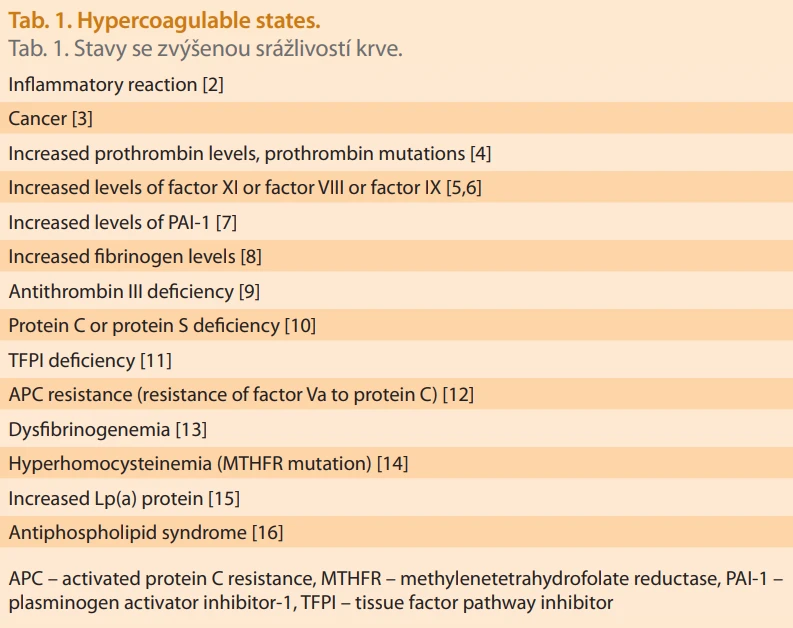
In some patients, with venous thromboembolic disease, known disorders predisposing to a hypercoagulable state are identified (Tab. 1) [2–16].
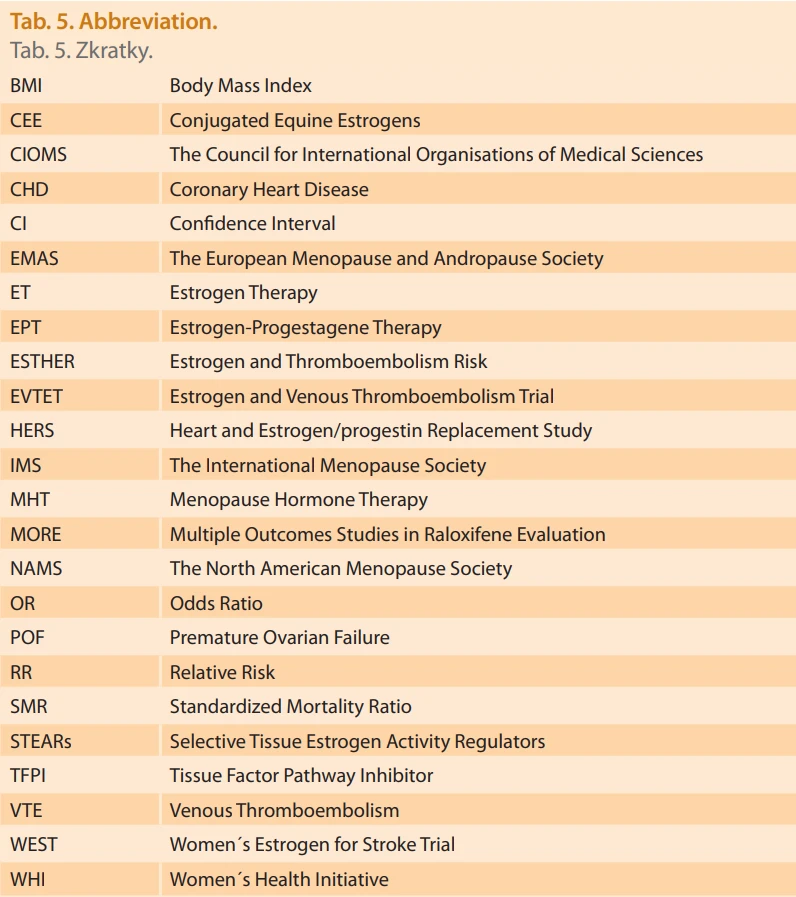
Menopause hormone therapy (MHT), since its introduction in 1942, has undergone periods of uncritical enthusiasm as a “fountain of youth” and periods of condemnation. A distinction must be made between estrogen-only therapy (ET) for women after hysterectomy, estrogen--progestogen therapy (EPT) for women with a uterus, and selective tissue estrogen activity regulators (STEARs), represented by tibolone, for both groups. MHT achieves up to 90% efficacy in relieving acute menopausal symptoms. In addition to its effectiveness in treating acute climacteric syndrome (menopausal vasomotor symptoms) – where menopausal hormone therapy remains the most effective treatment – its impact on various organometabolic conditions (osteoporosis, atherosclerosis, neurodegeneration, urogenital atrophy, depression) remains under discussion [17].
Estrogen deficiency accelerates bone remodeling. Estrogens inhibit osteoclast activity and apoptosis of osteoblasts via cytokines and growth factors, and stimulate osteoprotegerin production. Early menopause is a major osteoporosis risk factor. Estrogens are effective antiresorptive agents, restoring premenopausal bone turnover levels. Minimal effective doses include: 0.3 mg of conjugated equine estrogens (CEE), 0.5 mg of oral 17b-estradiol, or 0.014 mg of transdermal 17b-estradiol.
Of course, MHT is also associated with known adverse effects. The results of recent prospective studies have led to extensive discussions regarding the risk-benefit ratio.
Common side effects of MHT include mastalgia and fluid retention. Estrogen--related side effects include withdrawal bleeding, nausea, leg cramps, and headaches. Progestogens may contribute to mood swings, bloating, increased appetite, and a feeling of tension. Absolute contraindications for MHT include estrogen receptor-positive malignancies – such as breast cancer, gastric cancer, bladder cancer, lung cancer and endometrial stromal sarcoma – active liver disease, unexplained vaginal bleeding, arterial atherosclerosis, and acute venous thromboembolic disease [17].
Reanalyses of older studies confirm that early initiation of MHT (within 10 years of menopause) offers cardiovascularprotection, whereas delayed initiation increases risk (the window of opportunity concept, the healthy-cell bias hypothesis) [18].
The care of women during this period constitutes a complex clinical challenge requiring an individualized approach to each patient [19–21].
Results
Menopause hormone therapy and thromboembolic disease
The relative risk (RR) of thromboembolic disease among menopause hormone therapy users ranges between 2 and 5 (Tab. 2) [22–31].
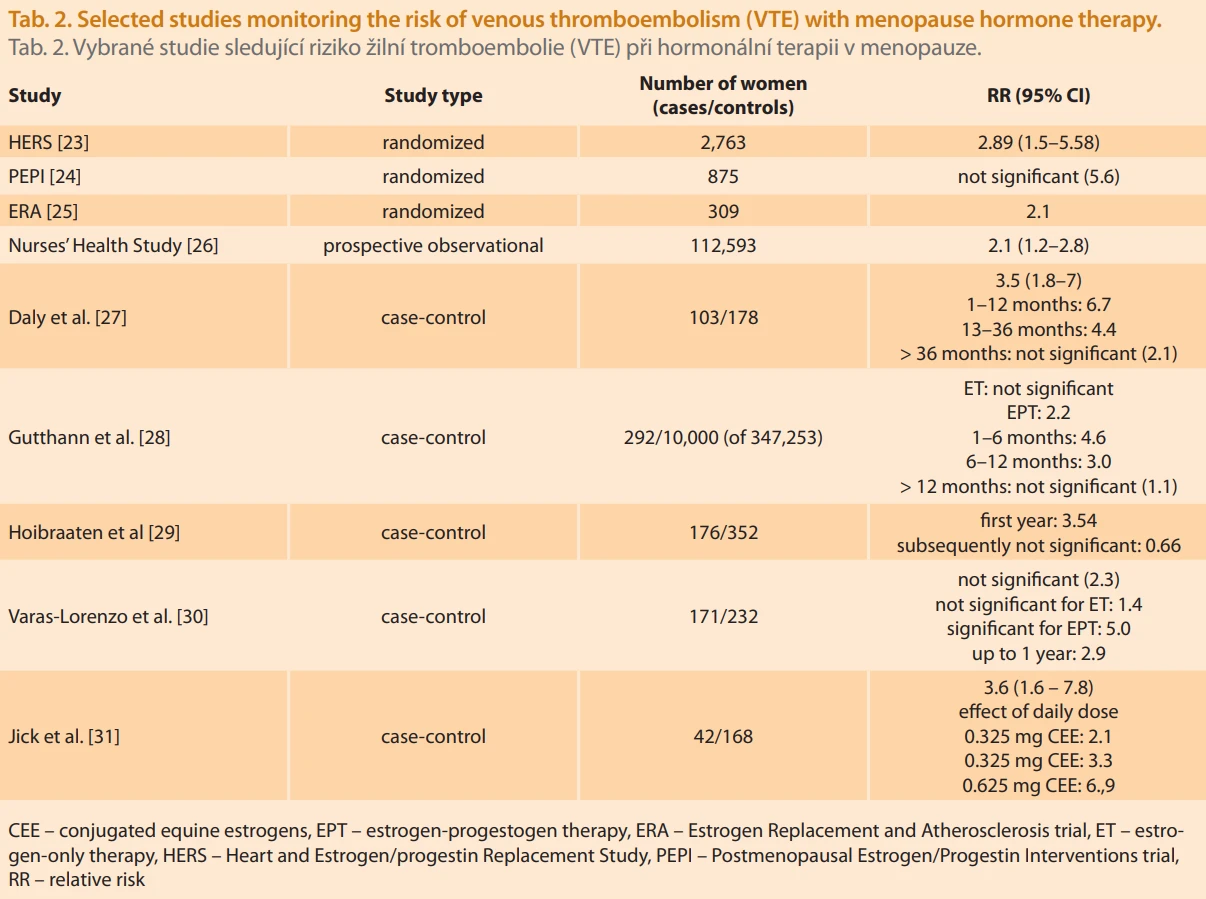
The HERS trial (Heart and Estrogen//progestin Replacement Study) was a secondary prevention trial for coronary heart disease (CHD) and included 2,763 women with a mean age of 67 years. It found no reduction in CHD events over 4.1 years, with more events during the first year. The HERS [23] reported an RR of 2.89 (95% CI 1.5–5.58) over four years of follow-up, decreasing to 2.08 in the extended HERS II study [32], with a 2.7-year observation segment yielding an RR of 1.4 [33].
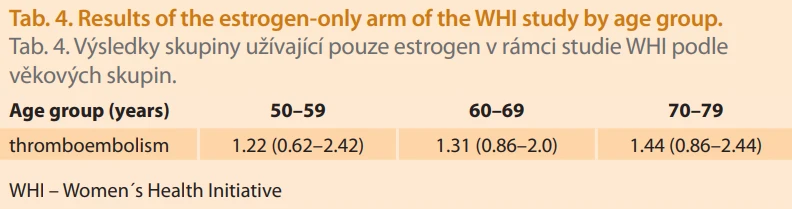
The Women’s Health Initiative (WHI) study [34] focused on primary prevention of CHD and included 16,000 women aged 50–79 years (mean 63.2 years). The study reported an RR 2.11 (95% CI 1.58–2.82), with age remaining a significant modifying factor (Tab. 3, 4).
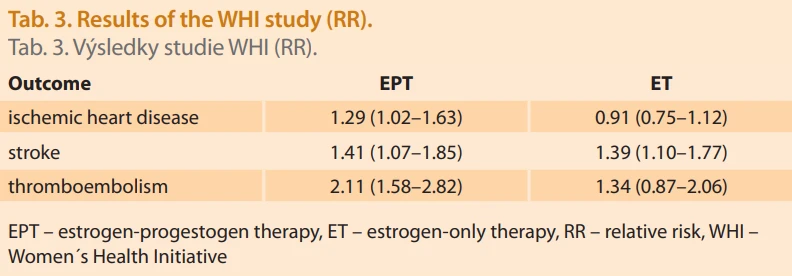
A key limitation of WHI and HERS was that inclusion in the study did not require the presence of acute menopausal symptoms, which currently represent the primary clinical indication for MHT. These trials aimed to evaluate MHT as a population-wide preventive strategy for CHD, and their findings were largely negative in this regard. A subsequent WHI reanalysis by age group and time passed since menopause found that ET carries a lower CHD risk than EPT (P = 0.02). In women aged 50–59, MHT did not increase the risk of CHD [34].
Beral et al. [35] summarizes data from HERS, WHI, WEST (Women’s Estrogen for Stroke Trial), and EVTET (Estrogen in Venous Thromboembolism Trial) – placebo-controlled prospective studies involving over 20,000 women observed for 4–9 years – demonstrating that MHT significantly increases the risk of VTE with an RR of 2.16, exclusively linked to oral MHT.
A meta-analysis of 12 studies [36] from 2002 reported an RR of 2.14 (95% CI 1.64–2.81), with the highest risk observed during the first two years of therapy (RR in year 1 : 3.49, 95% CI 2.33–5.59).
A large case-control study [27] found an RR of 2.1 (95% CI 1.4–3.2), with significant risk occurring in the first six months (RR 4.6, 95% CI 2.5–8.4) and the subsequent six months (RR 3.0, 95% CI 1.4–6.5), compared to long-term use exceeding one year. (RR 1.1, 95% CI 0.6–2.1). No difference was observed regarding composition, dose, or administration route of MHT.
Reviews of studies from 1980–2005 demonstrate RR values ranging from 1.22 (95% CI 0.76–1.94) to 4.5 (95% CI 1.3–15.1), with the highest risk consistently observed in the first year of use. Slightly increased risk has been noted for EPT versus ET (RR 1.6, 95% CI 1.13–2.26). Oral administration is associated with a higher risk (RR 4, 95% CI 1.9–8.3) compared to transdermal formulations [37].
A disadvantage of MHT for users is the increasing risk of VTE with age, whereas an advantage is the possibility of obtaining a more valid medical history prior to MHT initiation, as previous hypercoagulable periods (e. g., pregnancy) may have already revealed underlying thrombophilic states.
Route of MHT administration
Published data do not consistently differentiate between MHT preparations in terms of estrogen dose or progestin type, but most indicate that the route of administration plays a key role in determining the risk of VTE. Non-oral routes are generally considered safer.
MHT induces procoagulant changes, including increased levels of coagulation factors VII and VIII and decreased levels of antithrombin III and protein S. These effects are less pronounced with non-oral administration [38].
In the ESTHER (Estrogen and Thromboembolism Risk) study [39] involving 155 cases of VTE and 381 controls, oral estrogen therapy was associated with a significant RR of 3.5 (95% CI 1.8–6.8) compared to untreated women, whereas transdermal therapy showed no increased risk (RR 0.9), even when combined with micronized progesterone (RR 0.7).
A multicenter case-control study of 235 women with idiopathic VTE and 554 controls demonstrated increased RR for APC resistance (3.4, 95% CI 2–5.4) and prothrombin mutation (4.8, 95% CI 2.5–9.4). Oral MHT conferred an RR of 4.3 (95% CI 2.6–7.2), whereas transdermal MHT did not significantly increase risk (RR 1.2, 95% CI 0.8–1.7). The combination of oral MHT with thrombophilic mutations increased RR to 25 (95% CI 6.9–95), compared to women without mutations and no MHT. Transdermal therapy did not elevate risk beyond that associated with the mutations alone [40].
A reduction in tissue factor pathway inhibitor (TFPI) increases the risk of VTE. In a prospective crossover study, Fait et al. demonstrated a significant reduction in TFPI with oral estrogen therapy compared to transdermal administration (N = 45, P = 0.0001) [41].
Transdermal therapy does not increase VTE risk even in the presence of obesity, varicosities, smoking, immobilization, surgery, tumors, myeloproliferative syndrome, or inherited thrombophilia, as shown in a cohort of 255,067 women by Renoux. Oral therapy, in contrast, increased the risk by 1.5-fold [42].
The consensus of the Menopause Societe (formerly known as The North American Menopause Society NAMS) [43], European Menopause and Andropause Society EMAS [44], International Menopause Society IMS [45], and the Endocrine Society [46] supports the neutral effect of transdermal therapy regarding VTE risk, including high-risk groups.
MHT in women with a history of thromboembolism
MHT administration in women with a history of thromboembolism requires strong justification, and non-oral application is preferred. The majority of authors consider oral MHT to be an absolute contraindication in this context.
Nonetheless, a secondary prevention study was conducted. The EVTET trial [47] involving 140 women (71 on MHT, 69 placebo) under 70 years old showed increased risk of recurrent thromboembolism (RR 7.8, 10.7 vs. 2.3%, P = 0.05) with MHT comprising 2 mg estradiol valerate and 1 mg norethisterone acetate. The study was prematurely terminated after three years due to thromboembolic events in the MHT group: three pulmonary embolisms, four deep vein thromboses, and one cerebral sinus thrombosis.
In the WHI estrogen-progestogen arm, women with prior VTE exhibited an RR of 4.9 (95% CI 0.58–41.6) [34].
The French prospective cohort study followed 1,023 postmenopausal women aged 45 to 75 years with a history of VTE using MHT. They were followed for an average of 79 months after discontinuation of anticoagulation therapy. During the follow-up 130 women (12.7%) continued therapy, including 103 transdermal estrogen users (10.0%) and 10 oral estrogen users (1.0%). Recurrence occurred in 68 women without MHT, two women on oral MHT, and six women receiving transdermal MHT. There was no significant association between recurrent VTE and use of transdermal estrogens (RR 1.0, 95% CI 0.4–2.4), with the nonusers as a reference group. In contrast, women using oral estrogens had an increased risk of recurrent VTE (RR 6.4, 95% CI 1.5–27.3). Recurrence risk was sixfold higher with oral MHT but not increased with transdermal administration [48].
Margarido reported a study of 29 menopausal women with a history of VTE. Nine patients composed the transdermal estradiol treatment group and 20 the control group. Coagulation was assessed using thromboelastography in samples of whole blood and fibrinogen levels. The following thromboelastographic variables were measured: time for initial coagulation, clot formation rate, clot tensile strength, global index of coagulation and fibrinolysis and fibrinogen levels. Fibrinogen levels showed a 13.77 ± 19.94% reduction in the MHT group and a 5.51 ± 8.09% increase in the control group after 6 months. There were no differences observed in the other parameters comparing both groups. It shows that transdermal estrogen may not increase blood coagulability [49].
MHT in carriers of thrombophilic mutations
In reanalysis, the presence of thrombophilic disorders independently increases VTE risk, including APC resistance (RR 4.06, 95% CI 1.62–10.21), antithrombin deficiency (RR 3.33, 95% CI 1.15–9.65), low protein C levels (2.93; 1.06, 8.14), factor IX elevation (RR 2.34, 95% CI 1.26–4.35), elevated D-dimer levels (RR 3.84, 95% CI 1.99–7.42). When combined with MHT, for example in the presence of APC resistance, RR rises to 13.27 (4.3–40.97) [50].
Straczek, in a cohort of 789 women, demonstrated that the factor V Leiden mutation combined with oral MHT increases VTE risk 16.4-fold, whereas transdermal MHT increases risk 4.6-fold compared to non-users without the mutation. Thus, transdermal MHT appears to increase VTE risk to a level comparable to that associated with the mutation alone [40].
MHT in obese women
Obesity is a significant and well-documented risk factor for the development of thromboembolic disease. Increased body fat, commonly assessed by body mass index (BMI), contributes to a procoagulant state that promotes thrombus formation. Clinical studies have demonstrated that the risk of thromboembolic events rises exponentially with higher BMI. Individuals with a BMI ≥ 30 kg/m² have an approximately 2 - to 3-fold higher risk of developing deep vein thrombosis compared to individuals with normal weight. In those with a BMI ≥ 35 kg/m², this risk may increase up to 4-fold. This association is mediated by chronic low--grade inflammation induced by obesity. Furthermore, obesity contributes to mechanical compression of the pelvic and lower extremity veins, which impairs venous return and increases venous stasis, which represents a key element in Virchow’s triad for thrombogenesis. Additionally, obese patients frequently present with comorbid conditions such as hypertension, diabetes mellitus, and metabolic syndrome, which synergistically enhance the risk of VTE. Physical inactivity and a sedentary lifestyle, often associated with higher body weight, further exacerbate venous stasis [51].
In 850 postmenopausal women with overweight (BMI 26–29) and obesity (BMI > 30), oral MHT increased VTE risk 3.7 - and 5.1-fold, resp., whereas transdermal menopause hormone therapy did not increase the risk [52].
Among 1,058,259 postmenopausal women, oral ET showed a non-significant VTE risk increase (RR 1.5) in overweight women and no increase in obese women, while oral EPT significantly raised risk (RR 2.6 and 1.6, resp.). Transdermal MHT was not associated with an increased risk regardless of BMI [53].
Similarly, in 471,890 postmenopausal women, oral MHT was associated with increased VTE risk (RR 1.8 and 1.6), while transdermal MHT did not increase risk at any BMI level [54].
MHT alternatives and VTE risk
Drugs used for osteoporosis prevention and treatment, with the exception of raloxifene, do not increase the VTE risk. The relative risk for venous thromboembolism associated with raloxifene is comparable to that of oral menopause hormone therapy. The MORE (Multiple Outcomes Studies in Raloxifene Evaluation) study reported an RR of 3.1 (95% CI 1.5–6.2) [55].
There is no evidence that phytoestrogens or soy proteins, when used at recommended doses, increase the thromboembolism risk [56].
Tibolone administration also induces coagulation factor changes [57]. Clinical data comparing 3,150 woman-years of tibolone exposure to 1,269 woman--years of placebo showed a risk of venous complications of 0.33 (95% CI 0.1–1.02), although no primary study specifically addressing tibolone and the risk of VTE is available.
A newly emerging and highly effective class of drugs for managing vasomotor symptoms associated with the acute climacteric syndrome are neurokinin-3 (NK3) receptor antagonists. Selective antagonists of the NK3 receptor, such as fezolinetant, and dual NK1/NK3 receptor antagonists, such as elinzanetant, have demonstrated high efficacy in the treatment of menopausal vasomotor symptoms. Importantly, they carry no risk of thromboembolic disease [58].
Discussion
The predominant reason for not prescribing menopause hormone therapy is often fear rather than the presence of true contraindications.
Among patients, concerns are largely dominated by the perceived risk of breast cancer. The observed increase in breast cancer incidence – by 1 additional case per 1,000 women per year associated with estrogen-progestogen therapy – falls within the definition of a rare complication, as defined by the Council for International Organizations of Medical Sciences (CIOMS), i.e., a risk lower than 1/1,000 but higher than 1/10,000 [59]. In reality, modifiable lifestyle factors pose a greater risk for breast cancer. For example, obesity is associated with a relative risk of 1.26, daily alcohol consumption of more than 200 mL with RR of 1.32, and smoking carries a comparable risk. Nulliparity is associated with RR of 1.8. Conversely, engaging in physical exercise for four hours per week reduces the risk to an RR of 0.63 [60].
Among physicians, the primary concern is the risk of thromboembolic disease, which is discussed in detail in this article.
The shift away from hormone therapy following the publication of the Women’s Health Initiative (WHI) study results demonstrably led to a measurable deterioration in the health of postmenopausal women. Although the role of MHT has stabilized over the past two decades, irrational rejection of indicated therapy continues to persist. The wave of discontinuation of MHT provided an opportunity for several observational studies to evaluate the benefits and risks of therapy cessation.
Data from the Finnish National Death Registry, which included 332,202 women who discontinued MHT over a 15-year period, revealed 3,177 deaths due to cardiac events and 1,952 fatal strokes between 1994 and 2009. The average duration of MHT use in the cohort was 6.2 years, with a mean follow-up time of 5.5 years post-discontinuation. The standardized mortality ratio (SMR) in the first year after stopping MHT increased to 1.27 (95% CI 1.17–1.37) for cardiac events and 1.63 (95% CI 1.47–1.79) for stroke, compared with women who continued therapy. This increased risk was observed primarily in women under 60 years of age, with an SMR of 1.94 (95% CI 1.51–2.48) for cardiac events and 2.6 (95% CI 2.29–3.55) for stroke [61].
These findings are consistent with data from the follow-up of the estrogen-progestogen arm of the WHI study, which demonstrated higher mortality in women within three years of stopping MHT compared to placebo users, with a hazard ratio (HR) of 1.15 (95% CI 0.95–1.39) [62]. Observational studies consistently show lower mortality rates among MHT users [63]. A meta-analysis of 30 randomized controlled trials confirmed these findings, demonstrating reduced mortality among women who initiated MHT before the age of 60 or within 10 years of menopause. In 119,118 woman-years of follow-up, mortality was reduced by 39% (RR 0.61, 95% CI 0.3–0.95), with an average age of therapy initiation of 54 years [64].
Withholding hormone replacement therapy from women with premature ovarian insufficiency (POF), in whom therapy is otherwise indicated, constitutes a form of harm. In such cases, hormone regimens metabolically similar to endogenous human hormones are preferred. Non-oral administration provides the advantage of avoiding hepatic first-pass metabolism and minimizes the prothrombotic effects of estrogens. Doses are generally higher than those used in natural menopause, aiming to achieve serum estrogen levels of 100–150 pmol/L. If symptoms of urogenital atrophy persist, local treatment with low-dose estrogen or prasterone can be safely added without concern for overdose [65].
As an example, I could present the case of a woman found to carry a BRCA1 (Breast Cancer) mutation identified based on her family history. After undergoing prophylactic subcutaneous mastectomy while on combined hormonal contraception, she experienced a pulmonary embolism. She is now undergoing prophylactic oophorectomy and hysterectomy. This represents a typical case in which transdermal MHT may provide significant benefit within an individualized therapeutic approach.
The demand for MHT has increased in recent years. This highlights the need for more information and clearer clinical guidelines for the effective management of menopausal women [66].
The most recent systematic review examines MHT use in women with risk factors for VTE. A total of 762 studies were screened and 10 were included in the study. In women with risk factors for VTE, transdermal estrogen conferred no increased risk of VTE [67].
A general comparison of MHT with other risk factors for venous thromboembolism is also interesting. In a recent case-control study, 20,359 cases of VTE in women aged 50 to 64 years were evaluated along with 203,590 matched controls. Logistic regression analysis demonstrated that the highest risks were associated with metastatic cancer (odds ratio [OR] 13.66, 95% CI 12.64–14.75), surgery (OR 8.51, 95% CI 8.09–8.96), trauma (OR 3.52, 95% CI 3.32–3.73), and combined hormonal contraception (OR 5.22, 95% CI 4.67–5.84). In contrast, ET was associated with an OR of 1.13 (95% CI 1.04–1.38), while EPT showed an OR of 1.23 (95% CI 1.04–1.23). Menopausal hormone therapy plays a minor role in VTE risk. MHT did not significantly exacerbate other risk factors [68].
Conclusion
Non-hormonal treatment of acute climacteric syndrome is not associated with an increased risk of thromboembolic disease, however it does not offer any protection against chronic manifestations of estrogen-dependent changes (osteoporosis, atherosclerosis, dementia). In selected cases, it is entirely appropriate to step out of the comfort zone of absolutely safe prescribing and, based on available expert data, individually assess the benefits and risks of treatment for each patient.
Oral menopausal hormone therapy is associated with a two - to four--fold increased risk of thromboembolic disease. Despite the low incidence of venous thromboembolic disease, this risk should be considered during individualized treatment planning. The highest risk is observed during the first year of use.
In women with a history of thromboembolism, oral menopause hormone therapy significantly increases the risk of recurrence and is therefore contraindicated.
Transdermal menopause hormone therapy does not appear to increase the venous thromboembolic risk, even in women with a personal history of VTE or in those at high risk – such as carriers of thrombophilic mutations, overweight and obese women, and women undergoing an immobilization or surgery.
Zdroje
1. Oger E, Bressollette L, Nonent M et al. High prevalence of asymptomatic deep vein thrombosis on admission in a medical unit among elderly patients. Thromb Haemost 2002; 88 (4): 592–597.
2. Levine RL, LeClerc JR, Bailey JE et al. Venous and arterial thromboembolism in severe sepsis. Thromb Haemost 2008; 99 (5): 892–898. doi: 10.1160/TH08-01-0004.
3. Streiff MB, Holmstrom B, Angelini D et al. Cancer-associated venous thromboembolic disease, version 2.2021, NCCN Clinical Practice Guidelines in Oncology. J Natl Compr Canc Netw 2021; 19 (10): 1181–1201. doi: 10.6004/jnccn.2021.0047.
4. Murin S, Marelich GP, Arroliga AC et al. Hereditary thrombophilia and venous thromboembolism. Am J Respir Crit Care Med 1998; 158 (5 Pt 1): 1369–1373. doi: 10.1164/ajrccm.158.5.9712022.
5. Ali AE, Awad MK, Ali K et al. Factor XI as a new target for prevention of thromboembolism in cardiovascular disease: a meta-analysis of randomized controlled trials. J Thromb Thrombolysis 2025; 58 (1): 1–14. doi: 10.1007/s11239-024-02986-z.
6. Lowe G, Wu O, van Hylckama Vlieg A et al. Plasma levels of coagulation factors VIII and IX and risk of venous thromboembolism: systematic review and meta-analysis. Thromb Res 2023; 229 : 31–39. doi: 10.1016/j.thromres.2023.06.026.
7. Zhang Q, Jin Y, Li X et al. Plasminogen activator inhibitor-1 (PAI-1) 4G/5G promoter polymorphisms and risk of venous thromboembolism – a meta-analysis and systematic review. Vasa 2020; 49 (2): 141–146. doi: 10.1024/0301-1526/a000839.
8. de Moerloose P, Boehlen F, Neerman-Arbez M. Fibrinogen and the risk of thrombosis. Semin Thromb Hemost 2010; 36 (1): 7–17. doi: 10.1055/s-0030-1248720.
9. Thaler E, Lechner K. Antithrombin III deficiency and thromboembolism. Clin Haematol 1981; 10 (2): 369–390.
10. Alnor AB, Gils C, Vinholt PJ. Venous thromboembolism risk in adults with hereditary thrombophilia: a systematic review and meta-analysis. Ann Hematol 2024; 103 (10): 4285–4294. doi: 10.1007/s00277-024-05926-2.
11. Efthymiou M, Arachchillage DR, Lane PJ et al. Antibodies against TFPI and protein C are associated with a severe thrombotic phenotype in patients with and without antiphospholipid syndrome. Thromb Res 2018; 170 : 60–68. doi: 10.1016/j.thromres.2018.08.003.
12. Douxfils J. Cost-effective screening strategy to prevent venous thromboembolism in combined oral contraceptive users. Front Endocrinol (Lausanne) 2025; 16 : 1559162. doi: 10.3389/fendo.2025.1559162.
13. Mosesson MW. Dysfibrinogenemia and thrombosis. Semin Thromb Hemost 1999; 25 (3): 311–319. doi: 10.1055/s-2007-994933.
14. Cattaneo M. Hyperhomocysteinemia and venous thromboembolism. Semin Thromb Hemost 2006; 32 (7): 716–723. doi: 10.1055/s-2006-951456.
15. Dentali F, Gessi V, Marcucci R et al. Lipoprotein (a) as a risk factor for venous thromboembolism: a systematic review and meta-analysis of literature. Semin Thromb Hemost 2017; 43 (6): 614–620. doi: 10.1055/s-0036-1598002.
16. Specker C. Antiphospholipid syndrome. Z Rheumatol 2015; 74 (3): 191–198. doi: 10.1007/s00393-014-1459-z.
17. Fait T, Vrablik M. Hormone replacement therapy (HRT) shortages for treating menopause: what can clinicians do to relieve symptoms and concerns? Sci 2024; 6 (3): 46. doi: 10.3390/sci6030046.
18. Fait T, Vrablik M. Coronary heart disease and hormone replacement therapy – from primary and secondary prevention to the window of opportunity. Neuro Endocrinol Lett 2012; 33 (Suppl 2): 17–21.
19. Santoro N, Eppereson CN, Mathews SB. Menopausal symptoms and their management. Endocrinol Metab Clin North Am 2015; 44 (3): 497–515. doi: 10.1016/j.ecl.2015.05.001.
20. Kochersberger A, Coakley A, Millheiser L et al. The association of race, ethnicity, and socioeconomic status on the severity of menopause symptoms: a study of 68,864 women. Menopause 2024; 31 (6): 476–483. doi: 10.1097/GME.0000000000002349.
21. Ruth KS, Day FR, Hussain J et al. Genetic insights into biological mechanisms governing human ovarian ageing. Nature 2021; 596 (7872): 393–397. doi: 10.1038/s41586-021-03779-7.
22. Waren MP. A comparative review of the risks and benefits of HRT regimens. Am J Obstet Gynecol 2004; 190 (4): 1141–1167. doi: 10.1016/j.ajog.2003.09.033.
23. Hulley S, Grady D, Bush M et al. Randomised trial of estrogen plus progestin for secondary prevention of coronary heart disease in postmenopausal women. Heart and Estrogen/progestin Replacement Study (HERS) research group. JAMA 1998; 280 (7): 605–613. doi: 10.1001/jama.280.7.605.
24. Writing Group for the PEPI Trial. Effects of estrogen or estrogen/progestin regimens on heart disease risk factors in postmenopausal women: Postmenopausal Estrogen/Progestin Interventions (PEPI) trial. JAMA 1995; 273 (3): 199–208.
25. Herrington DM, Reboussin DM, Brosnihan KBet al. Effects of estrogen replacement on the progression of coronary-artery atherosclerosis. N Engl J Med 2000; 343 (8): 522–529. doi: 10.1056/NEJM200008243430801.
26. Grodstein F, Stampfer MJ, Goldhaber SZ et al. Prospective study of exogenous hormones and risk of pulmonary embolism in women. Lancet 1996; 348 (9033): 983–987. doi: 10.1016/S0140-6736 (96) 07308-4.
27. Daly E, Vessey MP, Hawkins MC et al. Risk of venous thromboembolism in users of HRT. Lancet 1996; 348 (9033): 977–980. doi: 10.1016/S01 40-6736 (96) 07113-9.
28. Gutthann SP, Garcia Rodríguez LA, Castellsague J et al. Hormone replacement therapy and risk of venous thromboembolism: population based case-control study. BMJ 1997; 324 (7083): 795–800. doi: 10.1136/bmj.314.7083.796.
29. Hoibraaten E, Abdelnoor M, Sandset PM. Hormone replacement therapy with estradiol and risk of venous thromboembolism: a population-based case-control study. Thromb Haemost 1999; 82 (4): 1218–1221.
30. Varas-Lorenzo C, Garcia-Rodrigues LA, Castellsague J et al. Hormone replacement therapy and risk of hospitalization for venous thromboembolism: a population-based study in southern Europe. Am J Epidemiol 1998; 147 (4): 387–390. doi: 10.1093/oxfordjournals.aje.a009461.
31. Jick H, Derby LE, Myers MW et al. Risk of hospital admission for idiopathic venous thromboembolism among users of postmenopausal oestrogen. Lancet 1996; 348 (9033): 981–983. doi: 10.1016/S0140-6736 (96) 07114-0.
32. Grady D, Wenger NK, Herrington D et al. Postmenopausal HT increases risk for venous thromboembolic disease. The Heart and Estrogen/progestin replacement study. Ann Intern Med 2000; 132 (9): 689–696. doi: 10.7326/0003-4819-132-9-200005020-00002.
33. Grady D, Herrington D, Bittner V et al. Cardiovascular disease outcomes during 6.8 years of hormone therapy. Heart and estrogen/progestin replacement study follow-up (HERS II). JAMA 2002; 288 (1): 49–57. doi: 10.1001/jama.288.1.49.
34. Rossouw JE, Anderson GL, Prentice RL et al. Risks and benefits of estrogen plus progestin in healthy postmenopausal women: principal results from the Women’s Health Initiative randomized controlled trial. JAMA 2002; 288 (3): 321–333. doi: 10.1001/jama.288.3.321.
35. Beral V, Banks E, Reeves G. Evidence from randomised trials on the long-term effects of hormone replacement therapy. Lancet 2002; 360 (9337): 942–944. doi: 10.1016/S0140-6736 (02) 11032-4.
36. Miller J, Chan BK, Nelson HD. Postmenopausal estrogen replacement and risk for venous thromboembolism: a systematic review and meta-analysis for the US Preventive Service Task Force. Ann Intern Med 2002; 136 (9): 680–690. doi: 10.7326/0003-4819-136-9-200205070-00011.
37. Wu O. Postmenopausal hormone replacement therapy and venous thromboembolism, Gen Med 2005; 2 (Suppl A): S18–S27. doi: 10.1016/s1550-8579 (05) 80061-0.
38. Birkhauser MH, Barlow DH, Notelovitz M et al. Health plan for the adult woman. London: Taylor and Francis 2005.
39. Scarabin PY, Oger E, Plu-Bureau G. Differential association of oral and transdermal oestrogen replacement therapy with venous thromboembolism risk. Lancet 2003; 362 (9382): 428–432. doi: 10.1016/S0140-6736 (03) 14066-4.
40. Straczek C, Oger E, Yon de Jonage-Canonico MB et al. Prothrombotic mutations, hormone therapy, and venous thromboembolism among postmenopausal women: impact of the route of estrogen administration. Circulation 2005; 112 (22): 3495–3500. doi: 10.1161/CIRCULATIONAHA.105.565556.
41. Fait T, Trnkova B, Kostirova M et al. Determination of concentrations of tissue factor pathway inhibitors and their changes during estrogen replacement therapy. Ceska Gynekol 2007; 72 (5): 343–347.
42. Renoux C, Dell’Aniello S, Suissa S. Hormone replacement therapy and the risk of venous thromboembolism: a population based study. J Thromb Haemost 2010; 8 (5): 979–986. doi: 10.1111/j.1538-7836.2010.03839.x.
43. Black D. The safety of oral versus transdermal estrogen. Menopause 2020; 27 (11): 1328–1329. doi: 10.1097/GME.0000000000001636.
44. Tremollieres F, Brincat M, Erel CT et al. EMAS position statement: managing menopausal women with a personal or family history of VTE. Maturitas 2011; 69 (2): 195–198. doi: 10.1016/j.maturitas.2011.03.011.
45. Sturdee DW, Pines A, Archer DF et al. Updated IMS recommendation on postmenopausal hormone therapy and preventive strategies for midlife health. Climacteric 2011; 14 (3): 302–320. doi: 10.3109/13697137.2011.570590.
46. Stuenkel CA, Davis SR, Gompel A et al. Treatment of symptoms of the menopause: an Endocrine Society Clinical Practice Guideline. J Clin Endocrinol Metab 2015; 100 (11): 3975–4011. doi: 10.1210/jc.2015-2236.
47. Hoibraaten E, Qvigstad E, Arnesen H et al. Increased risk in recurrent venous thromboembolism during hormone replacement therapy – results of the randomized, double-blind, placebo-controlled estrogen in venous thromboembolism trial (EVTET). Thromb Haemost 2000; 84 (6): 961–966.
48. Olié V, Plu-Bureau G, Conard J et al. Hormone therapy and recurrence of venous thromboembolism among postmenopausal women. Menopause 2011; 18 (5): 488–493. doi: 10.1097/gme.0b013e3181f9f7c3.
49. Margarido PF, Bagnoli VR, Maggio da Fonseca A et al. Transdermal estrogen therapy effects on fibrinogen levels in women with past history of venous thromboembolism: a pilot study. Clin Exp Obstet Gynecol 2011; 38 (3): 232–235.
50. Lowe G, Woodward M, Vessey M et al. Thrombotic variables and risk of idiopathic venous thromboembolism in women aged 45–64 years. Relationships to hormone replacement therapy. Thromb Haemost 2000; 83 (4): 530–535.
51. Frischmuth T, Tøndel BG, Brækkan SK et al. The risk of incident venous thromboembolism attributed to overweight and obesity: the Tromso Study. Thromb Haemost 2024; 124 (3): 239–249. doi: 10.1055/s-0043-1772212.
52. Canonico M, Oger E, Conard J et al. Obesity and risk of venous thromboembolism among postmenopausal women: the differential impact of hormone therapy by route of administration. The ESTHER Study. J Thromb Haemost 2006; 4 (6): 1259–1265. doi: 10.1111/j.1538-7836. 2006.01933.x.
53. Sweetland S, Beral V, Balkwill A et al. Venous thromboembolism risk in relation to use of different types of postmenopausal hormone therapy in a large prospective study. J Thromb Haemost 2012; 10 (11): 2277–2286. doi: 10.1111/j.1538-7836.2012.04919.x.
54. Vinogradova Y, Coupland C, Hippisley-Cox J. Use of hormone replacement therapy and risk of venous thromboembolism: nested case-control studies using the QResearch and CPRD databases. BMJ 2019; 364: k4810. doi: 10.1136/bmj.k4810.
55. Cummings SR, Eckert S, Kruger K et al. The effect of raloxifene on risk of breast cancer in postmenopausal women: results from the MORE randomized trial. Multiple outcomes of Raloxifene evaluation. JAMA 1999; 281 (23): 2189–2197. doi: 10.1001/jama.281.23.2189.
56. Wuttke W, Jarry H, Becker T et al. Phytoestrogens: endocrine disrupters or replacement for hormone replacement therapy? Maturitas 2003; 44 (Suppl 1): S9–S20. doi: 10.1016/s0378-5122 (02) 00344-4.
57. Winkler UH, Altkemper R, Kwee B et al. Effect of tibolone and continuous combined hormone replacement therapy on parameters in the clotting cascade: a multicenter, double-blind, randomized study. Fertil Steril 2000; 74 (1): 10–19. doi: 10.1016/s0015-0282 (00) 00587-2.
58. de Almeida AM, Oliveira P, Lopes L et al. Fezolinetant and elinzanetant therapy for menopausal women experiencing vasomotor symptoms: a systematic review and meta-analysis. Obstet Gynecol 2025; 145 (3): 253–261. doi: 10.1097/AOG.0000000000005812.
59. de Villiers TJ, Hall JE, Pinkerton JV et al. Revised global consensus statement on menopausal hormone therapy. Maturitas 2016; 91 : 153–155. doi: 10.1016/j.maturitas.2016.06.001.
60. Tan DA, Dayu AR. Menopausal hormone therapy: why we should no longer be afraid of breast cancer risk? Climacteric 2022; 25 (4): 362–368. doi: 10.1080/13697137.2022.2035711.
61. Mikkola TS, Tuomikoski P, Lyytinen H et al. Increased cardiovascular mortality risk in women discontinuing postmenopausal hormone therapy. J Clin Endocrinol Metab 2015; 100 (12): 4588–4594. doi: 10.1210/jc.2015-1864.
62. Heiss G, Wallace R, Anderson GL et al. Health risks and benefits 3 years after stopping randomized treatment with estrogen and progestin. JAMA 2008; 299 (9): 1036–1045. doi: 10.1001/jama.299.9.1036.
63. Mikkola TS, Tuomikoski P, Lyytinen H et al. Estradiol-based postmenopausal hormone therapy and the cardiovascular and all-cause mortality. Menopause 2015; 22 (9): 976–983. doi: 10.1097/GME.0000000000000450.
64. Salpeter SR, Walsh JM, Greyber E et al. Mortality associated with hormone replacement therapy in younger and older women: a meta-analysis. J Gen Intern Med 2004; 19 (7): 791–804. doi: 10.1111/j.1525-1497.2004.30281.x.
65. Panay N, Anderson RA, Nappi RE et al. Premature ovarian insufficiency: an International Menopause Society White Paper. Climacteric 2020; 23 (5): 426–446. doi: 10.1080/13697137.2020.1804547.
66. Laing A, Thomas L, Hillard T et al. Exploring the potential for a set of UK hormone replacement therapy eligibility guidelines: a suggested proposal on the topic of venous thromboembolism. Post Reprod Health 2024; 30 (1): 39–54. doi: 10.1177/20533691231223682.
67. Hicks A, Robson D, Tellis B et al. Safety of menopausal hormone therapy in postmenopausal women at higher risk of venous thromboembolism: a systematic review. Climacteric 2025; 28 (5): 497–509. doi: 10.1080/13697137.2025.2503874.
68. Porterfield L, Davis JW, Weller SC et al. Does hormone therapy exacerbate other venous thromboembolism risk factors? Menopause 2024; 31 (2): 123–129. doi: 10.1097/GME.0000000000002305.
Štítky
Dětská gynekologie Gynekologie a porodnictví Reprodukční medicínaČlánek vyšel v časopise
Česká gynekologie
2026 Číslo 5
- I „pouhé“ doporučení znamená velkou pomoc. Nasměrujte své pacienty pod křídla Dobrých andělů
- Neuromodulace v terapii hyperaktivního močového měchýře – výsledky klinických studií a možnost náboru do studie
- Inosin pranobex v léčbě chřipky a dalších respiračních infekcí virové etiologie
- Dlouhodobá ketodieta může poškozovat naše orgány
- Stresová inkontinence moči se týká žen i mužů. Jak vypadají aktuální možnosti léčby?
Nejčtenější v tomto čísle
- Methylation test versus dual staining in the triage of HR-HPV positive women – pilot data from cervical cancer screening
- Transverse B-Lynch suture – specific modality of a uterine compression suture
- Hysteroscopic septum resection and reproductive outcomes – a retrospective cohort study
- Female ejaculation and squirting – definition, classification and differential diagnosis