
Early recognition of acute clinical deterioration in non-acute care settings by nursing personnel
Authors:
P. Búřilová 1,2; J. Vinklárek 3; M. Krejčí 1,4; I. Doležalová 3; M. Baláž 3; A. Pokorná 1,2; J. Búřil 3
Authors‘ workplace:
Department of Health Sciences, Faculty of Medicine, Masaryk University, Brno, Czech Republic
1; Institute of Health Information and Statistics of the Czech Republic, Prague, Czech Republic
2; Department of Neurology, St. Anne’s University Hospital in Brno and Faculty of Medicine at Masaryk University, Brno, Czech Republic
3; Medical Rescue Service of the South Moravian Region, Brno, Czech Republic
4
Published in:
Cesk Slov Neurol N 2026; 89(5): 313-319
Category:
Original Paper
doi:
https://doi.org/10.48095/cccsnn2026313
Overview
Aim: Increasing life expectancy significantly impacts the rising demand for long-term care facilities and social care institutions for patients throughout the Czech Republic. T he aim of the study was to assess nurses’ ability to recognize symptoms of clinical deterioration suggestive of stroke onset in patients in follow-up long-term care and social care facilities, where physicians are not present on-site continuously. Methodology: A retrospective analysis of closed medical records (2022–2023) was conducted using data from the St. Anne’s University Hospital in Brno Emergency Medical Services (SM-REMS) and an acute inpatient care provider. The study included patients with suspected stroke (ICD-10 I64) who were transported by SM-REMS to the Comprehensive Stroke Center at St. Anne’s University Hospital in Brno from follow-up long-term care facilities and social care institutions, both types of settings lacking continuous physician presence. Results: Out of 1,154 transports, 138 patients with suspected stroke were identified as having been transferred from two follow-up long-term care facilities and four social care institutions to St. Anne’s University Hospital in Brno. Stroke was confirmed in 48 patients, and intravenous thrombolysis was performed in 5 cases, with a mean symptom-onset-to-treatment time of 5 h and 54 min. In 40 patients with ischemic stroke, late recognition occurred outside the time window that could have allowed for acute intervention. Hemorrhagic stroke was confirmed in 3 cases. In 65.2% of cases, stroke was excluded, and clinical deterioration was attributed to other neurological conditions, most commonly Parkinson’s disease (N = 43) and postictal states following epileptic seizures (N = 16). Conclusion: Strengthening the clinical decision-making competencies of nurses working in facilities without on-site physicians is essential for timely recognition of acute health status changes and appropriate response to evolving clinical situations.
Introduction
Demographic shifts are placing increasing demands on the scope and organization of healthcare delivery. By the end of 2023, the number of older adults in the Czech Republic had reached nearly 2.24 million, representing a rise of 412,000 individuals compared to 2013. Seniors thus accounted for 20.5% of the total population [1]. According to projections by the World Health Organization, the global population aged 60 years and older is expected to more than double by 2050, reaching approximately 2.1 billion people [2]. This demographic transformation places significant pressure on the development and capacity of social care services. Population aging, increasing incidence of neurodegenerative diseases, and the growing number of acute medical complications associated with involutional processes have resulted in a worldwide surge in the demand for long-term nursing care. Inpatient beds in non-acute care facilities are primarily intended for patients with reduced functional independence, serving as settings for recovery following surgical interventions, trauma, or serious illnesses [3]. Timely and accurate recognition of unexpected clinical deterioration in patients in follow-up care facilities and social care institutions is crucial to ensure an adequate standard of care, particularly in environments where continuous physician presence is not guaranteed.
Unexpected clinical deterioration refers to a sudden decline in vital functions that compromises the body’s ability to maintain homeostatic equilibrium [4]. This condition is associated with an increased risk of organ dysfunction, higher morbidity, and elevated mortality. Deterioration may occur secondarily due to the progression of an underlying disease, the emergence of a new health problem, or as a complication of delivered clinical care. The existing literature consistently indicates that signs of clinical deterioration are often detectable several hours before the onset of a serious adverse event [5–7]. Inadequate or delayed recognition of these early warning signs can have significant consequences for the patient, including prolonged hospitalization, unplanned transfer to an intensive care unit, and overall worsened prognosis [8,9]. In the Czech Republic, providers of inpatient healthcare are mandated to report adverse events annually through the Central Adverse Event Reporting System (CAERS). To ensure consistency in documentation and reporting practices, methodological guidelines have been developed to standardize these processes at the local level, enabling more efficient data collection and analysis on a national scale [10,11]. In 2023, a total of 417 healthcare facilities submitted data covering 2,564,694 patients. Among the reported 117,185 adverse events, 942 were classified as cases of unexpected clinical deterioration. However, the contextual specifics of these events are not delineated in the reports, which limits opportunities for detailed analysis. Moreover, social care institutions are not legally required to report adverse events to the CAERS system. As a result, the actual incidence of unexpected clinical deterioration in populations with high health burden may be significantly underestimated.
One of the most frequent causes of sudden clinical deterioration in the elderly population is pathology involving the CNS. Cerebrovascular accident (CVA), or stroke, is a typical example – it remains one of the leading causes of morbidity, long-term disability, and mortality worldwide, and represents a substantial social and economic burden for healthcare systems and patients alike [12]. In recent years, acute stroke care in the Czech Republic has seen significant improvements, leading to increased survival rates in the acute phase of the disease. However, the rise in the number of stroke survivors has also resulted in a growing population of patients requiring ongoing long-term nursing care or support in social care facilities. This trend underscores the need for systematic monitoring of chronically ill patients to reduce the risk of stroke recurrence and ensure timely detection of new events [13,14]. Facilities providing follow-up long-term nursing care represent a critical link in the healthcare continuum. However, staffing levels – particularly in nursing – often lack professionals with advanced competencies in the differential diag-nosis of acute neurological changes. This gap may contribute to misidentification of clinical deterioration, inappropriate triage, and delayed initiation of adequate medical intervention [15].
Methodology
A retrospective analysis was conducted using closed medical records from the St. Anne’s University Hospital in Brno Emergency Medical Services (SM-REMS) and an acute inpatient care provider. The study included patients with suspected CVA, classified under International Classification of Diseases (ICD-10) code I64, who were transported by SM-REMS from follow-up long--term care facilities and social care institutions to the Comprehensive Stroke Center (CSC) at St. Anne’s University Hospital in Brno. Patients were transported to the nearest specialized stroke center to meet the recommended door-to-needle time for thrombolytic therapy. The analysis involved linking validated data from the emergency medical services (EMS) information system with the hospital information system, aiming to evaluate available clinical and operational parameters. The study covered 24 months from 2022 to 2023.
Research aims
1.To assess the ability of nurses working in follow-up long-term care facilities and social care institutions to recognize symptoms indicative of clinical deterioration in patients with suspected stroke.
2.To evaluate the socio-demographic characteristics of patients with suspected stroke.
3.To analyze the clinical status of patients with suspected stroke, including the management and delivery of care.
Inclusion and exclusion criteria
Symptoms developed within long-term nursing care facilities and social service institutions, where EMS were called by nursing staff in the absence of an on-site physician. The evaluated cohort included all patients identified as Face–Arm–Speech–Time Plus (FAST+) positive during the initial assessment performed by SM-REMS. FAST+ is an extended stroke screening tool used in prehospital settings for suspected CVA. It includes the standard FAST criteria – facial droop (Face), arm weakness (Arm), speech disturbance (Speech), and time of onset (Time) – along with additional neurological symptoms such as altered consciousness, vomiting, disorientation, or seizure activity, which further increase the likelihood of a severe stroke [16]. For all patients with a positive FAST+ screening result, a telephone consultation was conducted with a certified primary stroke center or CSC. If criteria were met, the patient was subsequently transported to a specialized CSC at St. Anne’s University Hospitalin Brno.
Data Collection
All patients with suspected CVA, classified under ICD-10 diagnosis code I64, were retrospectively identified from the dispatch records (run sheets) of the SM-REMS. Cases in which neurological symptoms originated in follow-up long-term care facilities or social care institutions (nursing homes) were subsequently isolated for analysis. These patients were transported to St. Anne’s University Hospital in Brno, the designated referral center for specialized acute stroke care.
SM-REMS records were used to identify the symptoms reported by nursing staff that prompted activation of EMS due to suspected stroke. Subsequent linkage of these records with acute inpatient care data enabled a comprehensive evaluation of the available information, including the course of medical management, patient treatment, and final clinical outcomes.
This linkage enabled a comprehensive evaluation of available information, including the course of medical care, patient management, and final clinical outcomes. The data were analyzed using descriptive statistical methods.
Quality assessment
Data collection was conducted by experienced researchers affiliated with the South Moravian Region Emergency Medical Services and St. Anne’s University Hospital in Brno. The process involved senior nursing professionals with over ten years of clinical experience, as well as physicians from the First Department of Neurology at St. Anne’s University Hospital and the Faculty of Medicine, Masaryk University, Brno. For the analysis of neurological symptoms, additional expert input was provided by specialists in cerebrovascular diseases, extrapyramidal disorders, and epileptology. Their clinical expertise contributed to the validation of medical data and ensured a high level of professional rigor in the interpretation of findings.
Results
During the study period (2022–2023), a total of 973 telephone consultations were conducted with the CSC at St. Anne’s University Hospital in Brno concerning patients with suspected CVA (ICD--10 code I64). Of these, SM-REMS performed 641 transports in 2022 and 513 in 2023. Within the study sample, cases originating from two follow-up long-term care facilities and four social care institutions were identified from SM-REMS dispatch records. A total of 138 patients met the inclusion criteria, and their data were successfully linked with the hospital information system at St. Anne’s University Hospital in Brno. In all incidents, only non-physician healthcare personnel was present at the scene. In 92% of cases, newly developed motor symptoms, most commonly limb weakness, and speech disturbances were reported by nurses at follow-up long-term care facilities and social care institutions. In the remaining 8%, non-motor symptoms were observed, predominantly decreased levels of consciousness (e. g., somnolence). Before the arrival of SM-REMS, vital signs (blood pressure, heart rate, oxygen saturation, body temperature) were measured in 100% of cases, and blood glucose was measured in only 34 cases.
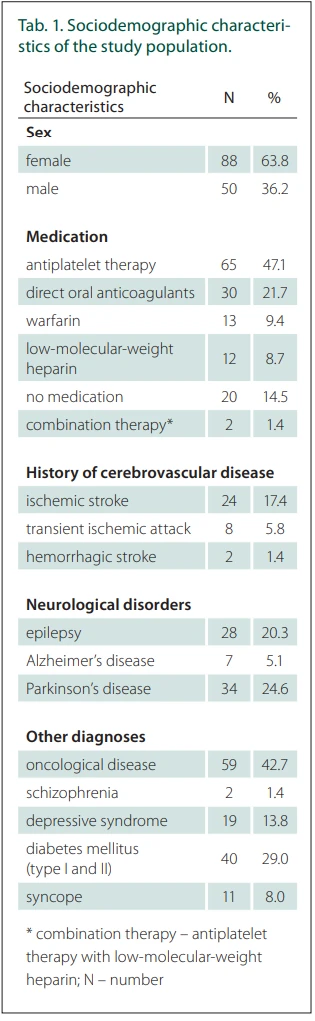
All 138 patients were assessed as FAST+ positive by the emergency teams. In addition, subfebrile temperature without prior treatment with antipyretic drugs was recorded in 16 cases (11.6%), and hypoglycemia, which was not detected by the nursing staff prior to arrival of SM-REMS, was recorded in 9 cases (6.5%). All patients (N = 138) were referred for urgent evaluation at the CSC at St. Anne’s University Hospital in Brno with a working diagnosis of suspected stroke. Tab. 1 provides a detailed overview of the sociodemographic characteristics of the patient cohort, including the presence of comorbidities and any anticoagulant or antiplatelet medication identified during the emergency assessment. The mean patient age was 81.9 years (range 63–95 years).
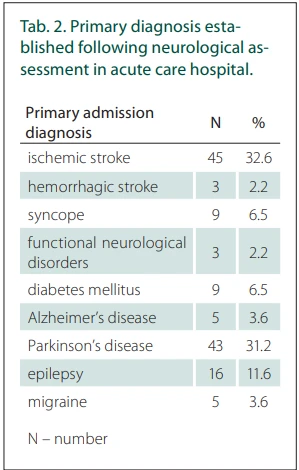
All patients included in the study cohort underwent a comprehensive neurological examination upon admission to St. Anne’s University Hospital in Brno. This assessment included brain CT with CTA and perfusion – the standard “stroke protocol”. Stroke was confirmed in 48 patients (34.8%), with a mean age of 80.2 years (see Tab. 2 for details). Among these, 40 patients had ischemic lesions verified by CT; however, they were outside the recommended time window for intravenous thrombolysis. Intravenous thrombolytic therapy was administered to 5 patients, with a recorded mean symptom onset-to-treatment time of 5 h and 54 min [initial NIHSS score ranging from 14 to 19], as documented by non-physician healthcare personnel at the site of symptom onset. In 3 additional patients, a hemorrhagic stroke was diagnosed based on CT imaging. For patients who were not eligible for intravenous thrombolysis, the time from symptom onset to treatment initiation was 9 hours and 36 minutes; these patients had a mean discharge mRS score of 3–4, indicating moderate to severe functional impairment. In the remaining 90 cases, stroke was ruled out, and an alternative cause of sudden clinical deterioration was identified. The most common differential diagnoses included pre-existing neurological conditions, primarily Parkinson’s disease (N = 43) and postictal states following epileptic seizures (N = 16). Among the 138 patients included in the study, infectious complications contributing to clinical deterioration were identified in 61 cases (Parkinson’s disease: N = 37; ischemic stroke: N = 16; epilepsy: N = 8). Infectious complications were verified by laboratory findings such as elevated C-reactive protein (CRP), leukocytosis, and abnormal urine and urine sediment analysis and one could expect they were identified by personnel in social care inappropriately. Six patients with neurological conditions (ischemic stroke [N = 2], Parkinson’s disease [N = 4]) and advanced oncological disease were repeatedly transported from follow-up care facilities due to sudden clinical deterioration during the study period but were not admitted to acute care beds because palliative treatment had already been indicated. The overview of all primary hospitalization diagnoses is summarized in Tab. 2.
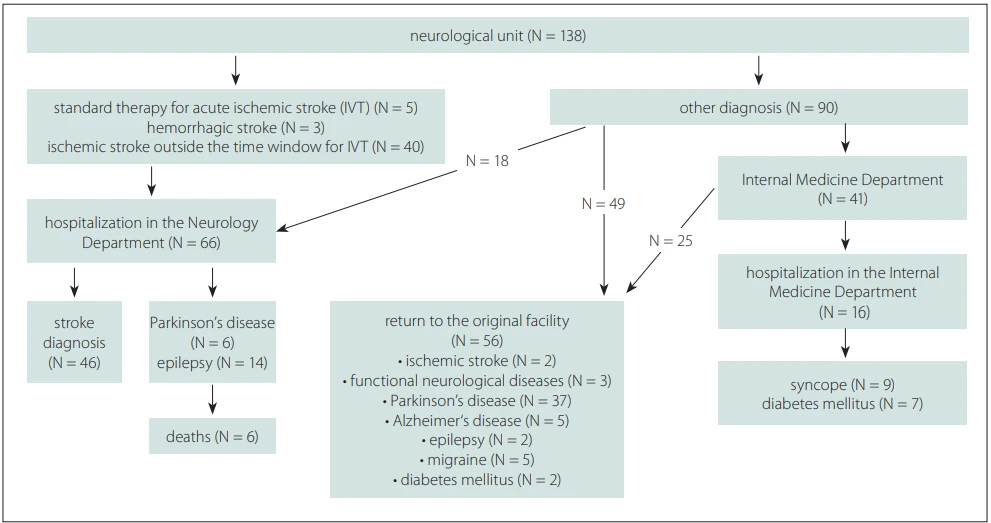
Out of the total patient cohort (N = 138), 66 individuals were admitted to the First Department of Neurology at St. Anne’s University Hospital and the Faculty of Medicine, Masaryk University in Brno. The average length of hospitalization was 13.7 days. During hospitalization, six patients died due to infectious complications and underlying comorbidities. The patient flow throughout the diagnostic and treatment process at St. Anne’s University Hospital and the Faculty of Medicine, Masaryk University, is illustrated in Fig. 1.
Discussion
The study was not designed to directly measure individual nursing competencies but rather to analyze trigger points influencing the clinical pathways following suspected stroke recognition in long-term care settings where nurses initiate SM-REMS activation. The results therefore reflect system-level processes occurring between symptom recognition, SM-REMS activation, and hospital diagnosis rather than an evaluation of individual professional performance. However, based on the data obtained, it was possible to identify potential gaps in the diagnostic skills of nursing staff. Within this framework, our findings demonstrate a relatively high proportion of stroke mimics, and a substantial number of ischemic strokes detected outside the therapeutic time window for intravenous thrombolysis, suggesting potential challenges in the early recognition of neurological deterioration in long-term care environments.
With the growing proportion of the aging population, the provision of high-quality and safe care for older adults has become a global priority, essential for supporting healthy aging and maintaining functional independence for as long as possible [17]. Particular attention must be paid to the quality of care delivered in follow-up long-term care facilities and residential social care institutions, where older adults constitute a significant proportion of the clientele. Despite increasing demands in clinical practice, there is still a lack of evidence-based guidelines specifically addressing the quality and safety of healthcare services in post-acute care settings. Many existing studies primarily focus on the effectiveness of individual interventions, while only limited attention is given to the overall quality of care from the patient’s perspective or to the safety of delivered services. Furthermore, some publications highlight considerable gaps in the literature concerning the quality of care for geriatric patients in non-acute inpatient settings [18,19]. Unexpected clinical deterioration in a patient residing in a long-term care facility represents a critical situation requiring a rapid, coordinated, and systematic response from the attending nursing staff, along with timely decision-making regarding the involvement of EMS. Although such events are classified as “unexpected,” certain risk factors can often be anticipated – for example, in patients with advanced cardiac disease or complex multimorbidityprofiles.
Delayed or inaccurate recognition of symptoms indicative of acute clinical deterioration may lead to a range of adverse outcomes, including complications, rehospitalization, reduced quality of life, increased mortality, prolonged hospital stays, and overall escalation in healthcare costs [20,21]. Particular attention should be given to cases involving 6 patients with neurological conditions (ischemic stroke [N = 2], Parkinson’s disease [N = 4]) who were also diagnosed with advanced oncological disease. Upon further follow-up, it was confirmed that these patients had been repeatedly transported from follow-up care facilities due to sudden clinical deterioration during the study period. However, they were not admitted to acute care beds, as palliative treatment had already been indicated. Care was provided under a supportive approach, without escalation of therapeutic interventions. This raises the question of whether the activation of EMS in such cases was clinically justified or whether these situations could have been managed directly within the facility, given adequate staffing and clinical expertise. The issue of potentially unnecessary ambulance dispatches for low-acuity conditions has been addressed in several studies [22], which emphasize the need for improved triage accuracy and enhanced decision-making support for care providers in non-acute care settings.
Stroke and its clinical mimics may share numerous overlapping features, but they also present with critical differences that must be accurately identified during acute patient assessment. Knowledge of the patient’s comprehensive medical history, current medication use, findings from physical and neurological examinations, application of validated clinical assessment tools for nursing personnel, and familiarity with neurological symptomatology are key elements that aid in distinguishing true CVAs from so-called “stroke mimics” [23]. Given the wide range of conditions that can simulate stroke, emphasis on differential diagnosis is essential, particularly in patients presenting with acute-onset neurological symptoms [15,24–26]. Common examples of stroke mimics include epileptic seizures, migraine, metabolic disturbances, central nervous system infections, and functional neurological disorders. In the present study cohort, intravenous thrombolytic therapy was administered in only 5 cases. These patients presented with an initial NIHSS score ranging from 14 to 19 and had a mean age of 69.8 years – lower than the average age of the overall cohort. Among the 48 confirmed cases of stroke, 40 were ischemic (83.3%) and 3 were hemorrhagic (6.25%), reflecting a relatively low rate of detection within the therapeutic time window for intravenous thrombolysis. This suggests potential delays in the diagnostic process within long-term care facilities, possibly related to limitations in clinical assessment by attending nursing staff, which can be deduced from the extended time from onset to treatment (9 h and 36 m). For patients who were not candidates for intravenous thrombolysis, the average discharge score on the modified Rankin Scale (mRS) was 3 to 4, indicating moderate to severe functional impairment upon transition to follow-up care.
In the analyzed cohort, 65.2% of cases initially suspected to be CVA were ultimately attributed to alternative primary diagnoses as the cause of unexpected clinical deterioration. Among patients with diabetes mellitus, blood glucose levels were not assessed by nursing staff in the long-term care facilities, and hypoglycemia was later diagnosed following evaluation by the EMS (EMS) team. Similarly, subfebrile temperatures were not appropriately recognized and were only identified upon EMS intervention. In the differential diagnosis of stroke mimics, epilepsy was identified as the primary cause in 16 patients, including 5 cases of recurrent postictal seizures in individuals with a history of stroke. A significant finding was the prevalence of extrapyramidal disorders, specifically Parkinson’s disease, which was present in 31.2% of cases. In these patients, changes in clinical status were not adequately recognized by nursing personnel, potentially contributing to misinterpretation of symptoms as a neurological emergency. Several case studies involving patients with Parkinson’s disease have demonstrated the clinical difficulty in distinguishing these symptoms from stroke mimics [27–29].
To differentiate stroke from its mimics, various predictive scoring systems have been validated in emergency department settings [30,31]. However, no validated assessment tools currently exist specifically for nurses and nursing personnel working in non-acute inpatient care facilities that would enable systematic identification of stroke mimics and timely differentiation between neurological and non-neurological causes of deterioration. The results of this study also raise the question of the potential impact in terms of the economic burden on the healthcare system. A total of 66 patients were admitted to the neurology department, with an average hospital stay of 13.7 days.
In follow-up long-term care facilities and residential social care institutions, the majority of daily care is provided by non-physician personnel, particularly care assistants. Nonetheless, according to current regulatory standards, at least one registered nurse must be present at all times, with the total number of nurses determined by the facility’s client capacity. The primary objective of these non-acute inpatient facilities is to deliver long-term supportive care to patients recovering from surgery, trauma, or serious illness. The majority of clients are older adults with advanced frailty, dementia, and high levels of functional dependence. Multimorbidity and polypharmacy are common, significantly complicating both caregiving and clinical decision-making processes. There is marked variability in the structure and organization of nursing care across different facilities, which also translates into differences in care quality [32]. A critical limitation in these settings is the absence of on-site physician coverage 24 h a day. This places increased demands on the competencies of nursing staff, who must be capable of promptly recognizing changes in clinical status, determining the need for medical consultation, or initiating an EMS response. It must also be acknowledged that nursing personnel in such facilities may not possess advanced education or specialization. Currently, it is not possible to systematically verify the qualifications of non-physician healthcare personnel working in social care institutions. However, future integration of national healthcare and social care work--force databases in the Czech Republic is expected to allow for better insight into staff qualifications. These factors underscore the urgent need for systematic support of clinical decision-making through standardized tools, evidence-based algorithms, and ongoing professional education and training. There is currently a scientific and political debate at the national level concerning the need to improve the qualifications of nursing staff and their legal powers in the area of decision-making and escalation procedures, with the aim of achieving greater diagnostic accuracy and access to appropriate care.
Implications for practice
The analysis of the collected data enabled a detailed evaluation of acute clinical deterioration symptoms and their relationship to the final diagnosis in patients with suspected stroke. The study provides valuable insight into clinical decision-making within long-term care settings, particularly in the context of prehospital identification of neurological conditions. Based on the study findings, a set of practical recommendations and clinical algorithms will be developed specifically for non-physician healthcare professionals, including registered nurses and paramedics. These tools are intended to support the identification of acute deterioration symptoms and will be tailored to enhance informed decision-making based on structured patient assessment. The recommendations will focus on improving the early recognition of neurological disorders and acute changes in health status, to strengthen the clinical decision-making competencies of nursing personnel and enhance the quality of initial triage in non-acute care facilities.
Strengths, limitations, and suggestions
The conducted study provides a unique dataset that integrates information from prehospital emergency care with data from the catchment-area acute care provider and its hospital information system. This enabled a detailed assessment of the diagnostic process in patients with suspected stroke, including the identification of stroke mimics, and offered an overview of the subsequent care trajectory within St. Anne’s University Hospital in Brno. The data analysis revealed significant gaps at the local level among long-term care and social service providers, particularly concerning the timely recognition of neurological symptoms. These shortcomings may contribute to unnecessary strain on acute care services, with direct implications for patient quality of life, increased mortality, and potentially greater economic burden on the healthcare system.
Several potential limitations of the study must be acknowledged. First, data collection was restricted to a selected number of long-term nursing care and social service providers within a specific geographic region (St. Anne’s University Hospital in Brno), which may limit the generalizability of the findings. The retrospective nature of the data collection also posed inherent challenges regarding data completeness and consistency. Therefore, only descriptive statistics were used so that any mathematical processing and resulting dependencies do not lead to incorrect conclusions. Another limitation was the time-intensive nature of the study and the need for advanced neurological expertise among participating researchers, which may have influenced the depth and scope of interpretation in certain cases. This limitation was mitigated by involving relevant clinical experts as part of a multidisciplinary research team.
Conclusion
Enhancing the clinical decision-making competencies of general nurses (registered nurses) and practical nurses (graduates at secondary school for nurses) working in long-term care and social service facilities is essential for the timely recognition of acute changes in health status and appropriate responses to emerging clinical situations. In six cases, emergency care may have been unnecessarily utilized (e. g., palliative care in oncology patients), while in other instances, clinical findings were insufficiently evaluated – subfebrile states (N = 16), hypoglycemia (N = 9), and recurrent postictal (post-stroke) epilepsy (N = 5). In total, 40 patients with ischemic stroke experienced delayed detection within the therapeutic window for intravenous thrombolysis, pointing to possible delays in the diagnostic process at the long--term care facility level.
To date, no study of this kind has been conducted in the Czech Republic that systematically integrates prehospital data with hospital-based diagnostics while focusing specifically on patients transferred from non-acute inpatient care settings. The findings of our study have identified key vulnerabilities within the care system that may impact both clinical outcomes and the efficient use of healthcare resources, particularly in elderly populations.
Based on these results, a prospective follow-up study will be initiated to support early detection of sudden clinical deterioration and to improve differential diagnostic capabilities. The outcome should be the development of practical, evidence-based recommendations aimed at strengthening the quality of care in long-term nursing care facilities and social service institutions. Given that there is currently a scientific and political debate at the national level about the need to improve the qualifications of nursing staff and their legal powers in the area of decision-making and escalation procedures, we hope that our study will be beneficial and contribute in a positive way to the need to support the education of nursing staff.
Ethics approval
The study was approved by the Head of the Education Department of the South Moravian Region Emergency Medical Services and subsequently reported to the Ethics Committee of St. Anne’s University Hospital in Brno. The study was approved by the ethics committee with reference number EK-FNUSA-08/ 2025 (8. 10. 2025). The data were used exclusively for public health research purposes. All collected data were processed and analyzed in anonymized form, in compliance with Act No. 110/2019 Coll., on the protection of personal data in information systems, as amended. All data collection was conducted in compliance with the Declaration of Helsinki.
Availability of data and materials
The data that support the findings of this study are available from the corresponding author upon reasonable request.
Conflict of interest
The authors declare they have no potential conflicts of interest concerning subjects, drugs, products, or services in the study.
Sources
1. Population. Czech Statistical Office 2025. [online]. Available from: https: //csu.gov.cz/obyvatelstvo.
2. Stoodley I, Conroy S. An ageing population: the benefits and challenges. Medicine 2024; 52 (11): 710–712. doi: 10.1016/j.mpmed.2024.08.013.
3. Gadó K, Szabo A, Markovics D et al. Most common cardiovascular diseases of the elderly – A review article. Dev Health Sciences 2022; 4 (2): 27–32. doi: 10.1556/2066.2021.00048.
4. Jones D, Mitchell I, Hillman K et al. Defining clinical deterioration. Resuscitation 2013; 84 (8): 1029–1034. doi: 10.1016/j.resuscitation.2013.01.013.
5. Albutt A, O’Hara J, Conner M et al. Involving patients in recognising clinical deterioration in hospital using the Patient Wellness Questionnaire: a mixed-methods study. J Res Nurs 2020; 25 (1): 68–86. doi: 10.1177/1744987119867744.
6. Beane A, Wijesiriwardan, W, Pell C et al. Recognising the deterioration of patients in acute care wards: a qualitative study. Wellcome Open Res 2022; 7 : 137. doi: 10.12688/wellcomeopenres.17624.2.
7. Byrne AL, Massey D, Flenady T et al. When nurses worry: a concept analysis of intuition in clinical deterioration. J Adv Nurs 2025; 81 (8): 4566–4583. doi: 10.1111/jan.16956.
8. Mohammmed Iddrisu S, Hutchinson AF, Sungkar Y et al. Nurses’ role in recognising and responding to clinical deterioration in surgical patients. J Clin Nurs 2018; 27 (9–10): 1920–1930. doi: 10.1111/jocn.14331.
9. Thiele L, Flabouris A, Thompson C. Acute clinical deterioration and consumer escalation in the hospital setting: a literature review. Resuscitation 2020; 156 : 72–83. doi: 10.1016/j.resuscitation.2020.08.011.
10. Methodology for unexpected deterioration of clinical condition. Central Adverse Event Reporting System 2025. [online]. Available from: https: //shnu.uzis.cz/res/file/metodicke_dokumenty/neocekavane_zhorseni_klinickeho_stavu_plna_verze-2022_final_na_web.pdf?utm_source=chatgpt.com.
11. New Methodological Materials. Central Adverse Event Reporting Systém. [online]. Available from: https: //mzd.gov.cz/nove-metodicke-materialy-v-systemu-hlaseni-nezadoucich-udalosti-shnu/?utm_source=chatgpt.com.
12. Martin SS, Aday AW, Almarzooq ZI et al. 2024 heart disease and stroke statistics: a report of us and global data from the American Heart Association. Circulation 2024; 149 (8): e347–e913. doi: 10.1161/CIR.0000000000001209.
13. Gurková E, Šaňák D, Bartoníčková D et al. Stroke specific measurement tools used to assess health related quality of life in young adults after ischemic stroke. Cesk Slov Neurol N 2023; 86/119 (1): 31–38. doi: 10.48095/cccsnn202331.
14. Řepík T, Štibraná K, Čeledová L et al. The problematics of post-stroke disability assessment. Cesk Slov Neurol N 2023; 86/119 (2): 148–152. doi: 10.48095/cccsnn2023148.
15. Búřilová P, Melišková M, Búřil J et al. The use of screening tests in differential diagnosis in nursing care. Crit Care Nurs Q 2024; 47 : 83–89. doi: 10.1097/CNQ.0000000000000493.
16. Václavík D, Bar M, Klečka L et al. Prehospital stroke scale (FAST PLUS Test) predicts patients with intracranial large vessel occlusion. Brain Behav 2018; 8 (9): e01087. doi: 10.1002/brb3.1087.
17. Rudnicka E, Napierała P, Podfigurna A et al. The World Health Organization (WHO) approach to healthy ageing. Maturitas 2020; 139 : 6–11. doi: 10.1016/j.maturitas.2020.05.018.
18. Chadborn NH, Devi R, Hinsliff-Smith K et al. Quality improvement in long-term care settings: a scoping review of effective strategies used in care homes. Eur Geriatr Med 2021; 12 (1): 17–26. doi: 10.1007/s41999-020-00389-w.
19. Wang X, Rihari-Thomas J, Bail K et al. Care quality and safety in long-term aged care settings: a systematic review and narrative analysis of missed care measurements. J Adv Nurs 2025; 81 (9): 5264–5290. doi: 10.1111/jan.16358.
20. Le Lagadec MD, Dwyer T, Browne M. Indicators of patient deterioration in poorly resourced private hospitals: Which vital sign to watch? A retrospective case–control study. Aust Crit Care 2024; 37 (3): 461–467. doi: 10.1016/j.aucc.2023.05.006.
21. Vincent JL, Einav S, Pearse R et al. Improving detection of patient deterioration in the general hospital ward environment. European Eur J Anaesthesiol 2018; 35 (5): 325–333. doi: 10.1097/EJA.0000000000000798.
22. Carnicelli A, Edwards DG, Williams AM. Paramedic education to support the use of low-acuity care pathways: a scoping review protocol. NursingReports 2023; 13 (1): 265–272. doi: 10.3390/nursrep13010025.
23. Catangui EJ. Identifying and differentiating stroke and stroke mimics. Nursing Standard 2019 Feb 18 [online ahead. doi: 10.7748/ns.2019.e11110.
24. Buck B, Akhtar N, Alrohimi A et al. Stroke mimics: incidence, aetiology, clinical features and treatment. Ann Med 2021; 53 (1): 420–436. doi: 10.1080/07853890.2021.1890205.
25. Hosseininezhad M, Sohrabnejad R. Stroke mimics in patients with clinical signs of stroke. Caspian J Intern Med 2017; 8 (3): 213–216. doi: 10.22088/cjim.8.3.213.
26. Rowley H, Vagal A. Stroke and stroke mimics: diagnosis and treatment. In Hodler J., Kubik-Huch RA, von Schulthess GK (eds.). Diseases of the brain, head and neck, spine 2020–2023: diagnostic imaging. Cham: Springer 2020.
27. Caslake R, Taylor KSM, Counsell CE. Parkinson’s disease misdiagnosed as stroke. BMJ Case Rep 2009; 2009: bcr07.2008.0558. doi: 10.1136/bcr.07.2008.0558.
28. Defebvre L, Krystkowiak P. Movement disorders and stroke. Rev Neurol 2016; 172 (8–9): 483–487. doi: 10.1016/j.neurol.2016.07.006.
29. Hsieh CY, Chen CH, Sung SF et al. Parkinsonism or other movement disorders presenting as stroke mimics. Acta Neurol Taiwan 2016; 25 (4): 124–128.
30. Tu TM, Tan GZ, Saffari SE et al. External validation of stroke mimic prediction scales in the emergency department. BMC Neurology 2020; 20 (1): 269. doi: 10.1186/s12883-020-01846-6.
31. Večerková S, Volný O, Ječmínková R et al. Stroke mimic prediction scales for initial hospital stroke diag-nosis. Cesk Slov Neurol N 2024; 87/120 (5): 309–312. doi: 10.48095/cccsnn2024309.
32. Chadborn NH, Devi R, Hinsliff-Smith K et al. Quality improvement in long-term care settings: a scoping review of effective strategies used in care homes. Eur Geriatr Med 2021; 12 (1): 17–26. doi: 10.1007/s41999-020-00389-w.
Labels
Paediatric neurology Neurosurgery NeurologyArticle was published in
Czech and Slovak Neurology and Neurosurgery
2026 Issue 5
Most read in this issue
- Safety aspects of transitioning from alteplase to tenecteplase in the treatment of acute ischemic stroke – a narrative review
- 100 years of the Czech Department of Neurology, Charles UniversityThe fates of Czech and German neurologists in Prague from 1938 to 1945
- Anatomy, etiology, and graphic imaging findings of hypertrophic olivary degeneration – description of 10 cases
- Patterns of cognitive-motor interference in patients with post-stroke cognitive impairment