
Justification of a medicinal form development based on the api dimethylammonium 3-methyl-2-(2-((e)-styryl)quinazolin-4-ylthio)butanoate with hepatoprotective and antioxidant effects for the needs of military medicine
Authors:
Antonina Avramenko 1; Andrii Kaplaushenko 1; Volodymyr Salionov 2
Authors‘ workplace:
Department of Physical, Colloidal, and Analytical Chemistry, Zaporizhzhia State Medical and Pharmaceutical University, Ukraine
1; Department of Clinical Laboratory Diagnostics and Biochemistry, Zaporizhzhia State Medical and Pharmaceutical University, Ukraine
2
Published in:
Čes. slov. Farm., 2026; 75, 100
Category:
Original Articles
doi:
https://doi.org/10.36290/csf.2026.023
Overview
Objective: The study aims to substantiate the development of an oral dosage form for military medicine based on the API dimethylammonium 3-methyl-2-(2-((E)-styryl)quinazolin-4-ylthio)butanoate, which demonstrates antioxidant and hepatoprotective activity. The molecule’s physicochemical properties and dissociation constant were evaluated.
Materials and Methods: Computer modelling was used to assess lipophilicity, physicochemical parameters, and ADME characteristics via the SwissADME service. Drug-likeness was evaluated according to Lipinski’s Rule of Five. Conductometric studies of API solutions (0.0625–0.5 M) were performed with a Konduktometr N 5721 M to determine χ, λv, λ∞, α, and the dissociation constant (7.45 × 10⁻⁸–9.2 × 10⁻⁸). The ionization constant was used to calculate pK = 7.13, indicating the pH range of optimal absorption.
Results: ADME analysis showed high gastrointestinal absorption and suitable solubility, supporting the feasibility of an oral dosage form. Conductometric data confirmed the API to be a weak electrolyte with increasing dissociation at lower concentrations. The pK value suggests preferential absorption in the neutral to slightly alkaline environment of the small intestine. Considering its pharmacological activity, the API is promising for further development of tablets or capsules for military and clinical use.
Conclusions: The findings justify designing a gastro-resistant oral dosage form ensuring API stability in gastric acid and efficient intestinal absorption. Such a form is particularly valuable for military medicine due to its stability, portability, and suitability for emergency and rehabilitation settings.
Keywords:
Military medicine – ADME – API – dimethylammonium 3-methyl-2-(2-((E)-styryl)quinozolin-4-ylthio)butanoate – conductometry – dissociation constant – antioxidant effect – hepatoprotective activity – oral medicinal form
Introduction
In modern conditions of armed conflicts, in particular for military personnel who are on the front lines or are undergoing hospital treatment or rehabilitation, the high risk of developing liver damage is a pressing problem. Risk factors include intense physical and psycho-emotional stress, exposure to toxins (including chemical agents and gunpowder gases), prolonged use of medications (e. g., analgesics, antibiotics, anti-inflammatory drugs, and others), as well as possible injuries and infections that trigger oxidative stress and inflammation (1, 2). The liver, as the key organ of detoxification, experiences significant stress, which can lead to acute or chronic damage, reducing the combat readiness of the personnel and complicating medical evacuation (3, 4). In military medicine, hepatoprotectors and antioxidants are considered potential countermeasures against such damage, particularly in the context of protection from oxidative stress induced by chemical agents or trauma (2, 5).
Ukraine is dependent on critical imports overall; therefore, the development of new original domestic active pharmaceutical ingredients (API) and medicinal forms based on them – specifically dimethylammonium 3-methyl-2-(2-((E)-styryl)quinazolin-4-ylthio)butanoate (hereinafter – API) – is a justified necessity for improving the prevention and treatment of liver pathologies in field and other conditions. The compound of 3-methyl-2-(2-((E)-styryl)quinazolin-4-ylthio)butanoate, synthesized on the basis of a quinazoline core with a thiol group and a styryl fragment, demonstrates pronounced hepatoprotective and antioxidant effects (6, 7).
3-methyl-2-(2-((E)-styryl)quinozolin-4-ylthio)butanoate (API – active pharmaceutical ingredient) was studied in detail by in vitro and in vivo methods at a dose of 50 mg/kg (1/10 LD50) for its ability to normalize biochemical parameters of hepatocytes under conditions of induced oxidative stress and poisoning of experimental animals with dichloroethane (16). Experimental studies were conducted in accordance with the Order of the Ministry of Public Health in Ukraine №944 from 14. 12. 2009 “On approval of the Procedure for conducting preclinical studies of medicinal products and examination of materials for preclinical studies of medicinal products” using a standardized methodology (Stefanov, O. V. (Ed.). (2001). Preclinical studies of drugs (methodological recommendations). Kyiv: Avicenna. 528 p.).
Thus, the results of an in-depth preclinical study showed that in the group of toxic liver damage by dichloroethane without treatment, 50 % of animals in the control group have died, and in the group receiving 3-methyl-2-(2-((E)-styryl)quinozolin-4-ylthio)butanoate (API) during treatment, no animal mortality was observed. The clinical picture in the groups of the animals without treatment was characterized by hypodynamia, decreased appetite and inhibited behavior of the animals. Some jaundice of the mucous membranes and sclera and an increase in liver size were also observed. When the animals were intoxicated with dichloroethane, the animals’ body weight significantly have decreased, while treatment of animals with API allowed to increase body weight.
When studying the therapeutic effect of API in the hepatitis model, it was found that it has a pronounced hepatoprotective effect. Thus, the level of total protein in the blood after the treatment with API increased by 47 % and approached the indicators in the intact group of animals. The introduction of API significantly increased the content of RNA in hepatocytes. This fact indicates the intensification of transcriptional processes in the cell and is a confirmation of the API participation in the activation of reparative processes in toxic hepatitis. As a result of treatment with API, the activity of transaminases in the blood was decreased, and the level of other enzymes also was reduced significantly. Thus, the activity of ALT (alanine aminotransferase) was decreased by 83 %, the activity of AST (aspartate aminotransferase) by 32 %, and the activity of LDH (lactate dehydrogenase) by 43 %. A decrease in the content of bilirubin and alkaline phosphatase to the level of intact animals was observed. Alkaline phosphatase activity was decreased with the administration of API by 67 %, and acid phosphatase activity in 77 %. Bilirubin levels were decreased by 65 %. This fact indicates the active membrane-protective effect of API. Its administration also led to an increase in cytochrome P450 levels by 17 %. The administration of API ensured a complete restoration of the detoxification function of the liver, as judged by an increase in the level of restored glutathione by 155 %.
API also has a pronounced antioxidant effect (reactivated SOD (superoxide dismutase) by 160 % and GPR (glutathione peroxidase) by 65 %, inhibited oxidative protein modification, as evidenced by a decrease in markers – APG (aldehyde phenylhydrazone) by 57 % and CPG (carboxyphenylhydrazone) by 72 %.
The restoration of the detoxification function of the liver under the influence of API was also confirmed by a 42% reduction in the duration of hexenal sleep in rats. 3-methyl-2-(2-((E)-styryl)quinozolin-4-ylthio)butanoate (API) also has a pronounced energy-enhancing effect. Thus, the level of glycogen and glucose-6-phosphate in the liver has increased after treatment with API. An increase in the production of ATP (adenosine triphosphate (or adenosine triphosphoric acid) was observed due to the activation of aerobic processes (an increase in the level of malate and the activity of cytochrome C oxidase) (16).
The study of pharmacodynamics is ongoing, the mechanism of hepatoprotection can also be explained by the effects that were revealed by the results of molecular docking of API. At the molecular level, the hepatoprotective effect, in our opinion, has a multi-targeted nature and is implemented through the simultaneous interaction of the molecule with key regulators of cell survival: cyclooxygenase-2 (inflammation), caspase-3 (apoptosis) and cytochrome P450 2E1 (oxidative stress). The highest energy profile of the interaction of the API molecule with COX-2 (cyclooxygenase-2) is observed in combination with inhibition of CYP2E1 (cytochrome P450 2E1), which explains the ability of the compound to effectively block the cascades of regulated hepatocyte death.
Its mechanism of action also includes neutralization of free radicals, inhibition of lipid peroxidation, and stimulation of hepatocyte regeneration, as confirmed by in-depth preclinical studies of similar heterocyclic derivatives (8, 9). The antioxidant properties of the API additionally enable effective counteraction to systemic inflammation, which is characteristic of frontline conditions where military personnel face combined exposure to risk factors, including potential poisoning by toxins or medication overload (10–12).
The rationale for the synthesis and development of a new pharmaceutical dosage form is based on the need for a stable, easy-to-use medicinal form adapted to the specifics of military medicine. Traditional hepatoprotectors, such as silymarin or curcumin, have limited bioavailability and are sensitive to storage conditions (humidity, temperature), which is critical in field hospitals or during evacuation (13–15). The new API-based medicinal form, for example, controlled-release tablets or injectable solutions, will ensure rapid absorption, prolonged action, and minimal side effects, facilitating prophylactic use before potential risks (16). The creation of new APIs involves a modular approach: condensation of quinazoline with butyrate and a styryl component to enhance antioxidant activity, followed by dimethylammonium salt formation to improve solubility (11). The use of dimethylammonium salt will certainly reduce the osmolality of a potential solution for parenteral administration, but our task is to create an oral dosage form, and the introduction of an organic cation always increases the antioxidant and hepatoprotective effects, because the action of the molecule as a whole depends on both the activity of the anion and its potentiation by a cation of organic nature. This enables integration of the substance into standard military pharmacotherapy protocols, reducing the incidence of complications such as acute liver failure and accelerating recovery (9).
The significance of this development for frontline military personnel lies in its potential to reduce mortality from secondary liver complications, optimize medical supply logistics, and increase overall body resilience to stress factors (15). In the context of ongoing conflicts, where liver damage cases are recorded among the Armed Forces of Ukraine, the introduction of such medicinal form could become a step toward innovative military medicine, combining scientific achievements with practical needs (14). The obtained data have already indicated the promising API potential as a key element of hepatoprotection (16).
The development of new active pharmaceutical ingredients and medicinal forms, including those based on dimethylammonium 3-methyl-2-(2-((E)-styryl)quinazolin-4-ylthio)butanoate, holds significant potential for further implementation. Research into the use of the API for creating a new drug for the prevention and treatment of pathologies caused by combat conditions is a relevant and justified task for military medicine.
The antioxidant and hepatoprotective activity of the dimethylammonium 3-methyl-2-(2-((E)-styryl)quinazolin-4-ylthio)butanoate was studied at the Pharmacology and Medical Prescription Department of Zaporizhzhia State Medical and Pharmaceutical University. The evaluation of antioxidant activity was conducted in vitro at a concentration of 10-6 M using models of initiation of lipid peroxidation (LPO), inhibition of superoxide radical, nitric oxide (NO), and oxidative protein modification. The results showed that the dimethylammonium 3-methyl-2-(2-((E)-styryl)quinazolin-4-ylthio)butanoate surpasses the activity of reference compounds (emoxipine, acetylcysteine) in most parameters (16). Further in vitro and in vivo studies confirmed the compound’s ability to normalize biochemical parameters of hepatocytes under induced oxidative stress and poisoning of experimental animals with dichloroethane. The analysis included glutathione levels, SH-groups, cytochrome P450, superoxide dismutase (SOD) activity, glutathione peroxidase (GPx), accumulation of oxidative protein modification products (aldehyde phenylhydrazones, carboxy phenylhydrazones), as well as indicators of adaptive protein synthesis (total protein, RNA, free amino acids, urea) (16).
The results demonstrate the pronounced hepatoprotective activity of the compound, which competes with Essentiale in membrane-stabilizing effects and surpasses it in antioxidant, energotropic, and detoxifying activity (16).
The aim of the study
The purpose of the research is to substantiate and assess the prospects for developing an oral medicinal form that will be able to ensure stability, bioavailability, and ease of use in military personnel operating under extreme and field conditions or undergoing treatment or rehabilitation, based on the active pharmaceutical ingredient dimethylammonium 3-methyl-2-(2-((E)-styryl)quinazolin-4-ylthio)butanoate, which exhibits pronounced antioxidant and hepatoprotective effects, by calculating the electrolytic and lipophilic properties of the molecule and determining the constant and index of its dissociation constant.
Materials and methods of research
API Characteristics. The 3-Methyl-2-(2-((E)-styryl)quinazolin-4-ylthio)butanoic acid (Fig. 1) was synthesized at the Pharmaceutical Chemistry Department of Zaporizhzhia State Medical and Pharmaceutical University (16).
The compound is a pale yellow crystalline substance, soluble in alcohols, 1,4-dioxane, and DMF, partially soluble in water and aqueous alkali solutions (16). The structure of the compound was confirmed by mass spectrometry and chromato-mass spectrometry methods. Physicochemical parameters were determined, including lipophilicity, half-wave potential, and redox potential. Theoretical parameters were calculated using specialized computer programs and correlation equations (16).
Method for obtaining the dimethylammonium salt
To synthesize the water-soluble crystalline salt, 0.01 mol of the 3-methyl-2-(2-((E)-styryl) quinazolin-4-ylthio)butanoic acid is dissolved in 50 ml of 96 % ethanol, followed by the addition of 0.01 mol of dimethylamine in the form of a 40% aqueous solution. The mixture is kept for 24 hours at room temperature. The precipitate is filtered, washed with diethyl ether, and dried.
Prediction of ADME parameters for the API dimethylammonium 3-methyl-2-(2-((E)-styryl)quinazolin-4-ylthio)butanoate
Evaluation of lipophilicity, solubility, a range of pharmacokinetic parameters, and compliance with Lipinski's Rule (drug-likeness) for the dimethylammonium 3-methyl-2-(2-((E)-styryl)quinazolin-4-ylthio)butanoate was performed using the online platform SwissADME (Swiss Institute of Bioinformatics, Switzerland) (17). The analysis included determination of parameters such as aqueous solubility (logS according to the ESOL model), ability to penetrate the blood-brain barrier (BBB permeant), predicted bioavailability (Bioavailability Score according to Lipinski and Veber rules), potential interaction with major cytochrome P450 isoforms (CYP1A2, CYP2C19, CYP2C9, CYP2D6, CYP3A4), and the level of gastrointestinal absorption (HIA). Input data for the prediction were the SMILES structures of the studied molecules (18-21). The obtained results are presented in Table 1. These results were used to predict the feasibility of oral administration of the API dimethylammonium 3-methyl-2-(2-((E)-styryl)quinazolin-4-ylthio)butanoate.
Determination of the degree and dissociation constant of the API dimethylammonium 3-methyl-2-(2-((E)-styryl)quinazolin-4-ylthio)butanoate
To predict the section of the gastrointestinal tract where absorption of the active pharmaceutical ingredient dimethylammonium 3-methyl-2-(2-((E)-styryl)quinazolin-4-ylthio)butanoate occurs, the degree, constant, and pK value of dissociation of the API were determined and calculated. Physicochemical parameters were determined conductometrically using the Konduktometr N 5721 M instrument (Czech Republic) (22, 23).
Experiment 1. Determination of the standard solution constant. Pour 50 ml of 0.01 N KCl solution into a 100 ml chemical beaker and measure the electrical conductivity of the solution. Perform at least 6 measurements. The specific electrical conductivity (χtheor) of 0.01 N KCl solution at 20–25 °C is 0.00127 Ω-1·cm-1. Based on the obtained data, calculate the constant of the standard potassium chloride solution.
Experiment 2. Determination of the API dissociation constant. Pour out the KCl solution and thoroughly rinse the beaker with distilled water. Then add 0.5 M aqueous solution of the API dimethylammonium 3-methyl-2-(2-((E)-styryl)quinazolin-4-ylthio)butanoate and perform electrical conductivity measurements six times. Sequentially dilute the solution to concentrations of 0.25 M, 0.125 M, and 0.0625 M by adding the appropriate amount of purified water.
For each concentration, perform six conductivity measurements; record the average value in Table 2. Then, for solutions of the API dimethylammonium 3-methyl-2-(2-((E)-styryl)quinazolin-4-ylthio)butanoate at the corresponding concentration, calculate: specific electrical conductivity (χ), molar electrical conductivities (λv), molar electrical conductivity at infinite dilution (λ∞), degree of dissociation (α), and dissociation constant (Kdiss).
Calculations are performed using the formulas:
Kst = χKCl theor / χKCl pract, where:
Kst – standard constant (KCl);
χKCl theor – specific electrical conductivity of the standard solution KCl;
χKCl pract – experimental specific electrical conductivity of the KCl solution.
Kst = 0.00127 / 25.0 = 4.98 × 10⁻⁵
χAPI = Kst × χAPI exp, where:
χAPI – specific electrical conductivity of solutions of the API dimethylammonium 3-methyl-2-(2-((E)-styryl)quinazolin-4-ylthio)butanoate;
Kst – standard constant, potassium chloride;
χAPI exp – experimental electrical conductivity of solutions of the API dimethylammonium 3-methyl-2-(2-((E)-styryl)quinazolin-4-ylthio)butanoate;
λ∞ = lk + la, where:
λ∞ – equivalent electrical conductivity at infinite dilution of the API dimethylammonium 3-methyl-2-(2-((E)-styryl)quinazolin-4-ylthio)butanoate solution;
lk – mobility of the dimethylammonium cation;
la – mobility of the 3-methyl-2-(2-((E)-styryl)quinazolin-4-ylthio)butanoate anion.
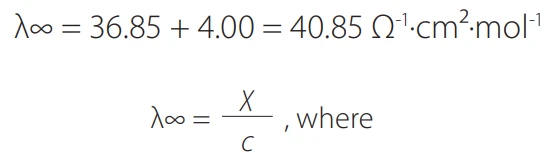
λv – molar electrical conductivity of the API dimethylammonium 3-methyl-2-(2-((E)-styryl)quinazolin-4-ylthio)butanoate solution at concentration c;
χAPI – specific electrical conductivity of the API dimethylammonium 3-methyl-2-(2-((E)-styryl)quinazolin-4-ylthio)butanoate solution at concentration c.
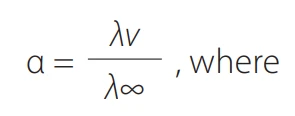
α – degree of dissociation of dimethylammonium 3-methyl-2-(2-((E)-styryl)quinazolin-4-ylthio)butanoate;
λv – molar electrical conductivity of the API dimethylammonium 3-methyl-2-(2-((E)-styryl)quinazolin-4-ylthio)butanoate solution;
λ∞ – equivalent electrical conductivity of the API dimethylammonium 3-methyl-2-(2-((E)-styryl)quinazolin-4-ylthio)butanoate solution at infinite dilution;
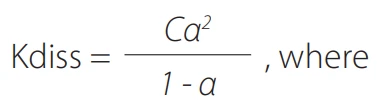
Kdiss – dissociation constant of the API dimethylammonium 3-methyl-2-(2-((E)-styryl)quinazolin-4-ylthio)butanoate;
α – degree of dissociation of the API dimethylammonium 3-methyl-2-(2-((E)-styryl)quinazolin-4-ylthio)butanoate at concentration c.
Results of the study
The API dimethylammonium 3-methyl-2-(2-((E)-styryl)quinazolin-4-ylthio)butanoate is a compound that is accessible for synthesis and retains its properties during long-term storage. Based on the results of the computer ADME analysis of the API dimethylammonium 3-methyl-2-(2-((E)-styryl)quinazolin-4-ylthio)butanoate (Tab. 1), it is evident that the discussed substance complies with Lipinski's principles of drug-likeness, as well as Veber's rule (for absorption and permeability) and general solubility/permeability criteria. The molecular weight of the API dimethylammonium 3-methyl-2-(2-((E)-styryl)quinazolin-4-ylthio)butanoate is 409.54 g/mol, which is ideal for oral drugs: ≤ 500 g/mol (according to Lipinski's rule) to ensure good intestinal permeability and absorption. This indicates that the molecule can pass through cell membranes. Regarding lipophilicity (Consensus Log Po/w: 2.89). The optimal range for oral drugs is 1–5 (too low a value means poor membrane passage; too high – low solubility and potential toxicity). The calculated value falls within the optimal zone and is supported by individual assessments. The results indicate balanced hydrophobicity for passing through lipid bilayers. There are 4 hydrogen bond acceptors and 1 donor in the molecule. Lipinski's limits to avoid excessive polarity that could hinder permeability: ≤ 10 acceptors and ≤ 5 donors. Both values are within normal limits, contributing to good oral bioavailability by allowing the molecule to form necessary interactions for solubility without complicating membrane passage. Topological polar surface area (TPSA: 107.82 Ų). Preferred for oral absorption: < 140 Ų (Veber's rule; lower TPSA correlates with better permeability), the value is favorable, indicating moderate polarity that supports intestinal absorption (e. g., via passive diffusion) without excessive binding to water or proteins, which could limit bioavailability. Rotatable bonds (6). Veber's rule: ≤ 10, which helps binding to targets without reducing oral absorption. This parameter also meets the standard and indicates that the molecule is neither too rigid nor too flexible, which otherwise could lead to reduced pharmacokinetic properties. Water solubility (Moderately Soluble). Log S values: ESOL -4.39 (solubility ~0.0167 mg/ml), Ali -5.10 (~0.00322 mg/ml), SILICOS-IT -6.24. For oral drugs, moderate solubility (Log S between -4 and -6) is acceptable, especially if bioavailability enhancers are used. The obtained level ensures dissolution of the molecule in gastrointestinal fluids for absorption, avoiding issues such as incomplete dissolution in the intestine. It is important that the dimethylammonium 3-methyl-2-(2-((E)-styryl)quinazolin-4-ylthio)butanoate is not highly insoluble, which could reduce its suitability for oral routes.

Thus, based on previous synthetic, physicochemical, pharmacological, and predictive studies, the API dimethylammonium 3-methyl-2-(2-((E)-styryl)quinazolin-4-ylthio)butanoate can be considered a molecule suitable for developing a potential original medicinal product for oral administration.
Based on the obtained experimental and calculated data on the electrical conductivity of solutions of the API dimethylammonium 3-methyl-2-(2-((E)-styryl)quinazolin-4-ylthio)butanoate at various concentrations, a preliminary conclusion can be drawn that this molecule behaves as a weak electrolyte. The analysis is based on the classical theory of weak electrolytes (Ostwald's dilution law). According to the calculations, the API dimethylammonium 3-methyl-2-(2-((E)-styryl)quinazolin-4-ylthio)butanoate exhibits characteristics of a very weak electrolyte with a low degree of dissociation, which explains the low electrical conductivity even at relatively high concentrations. The obtained dissociation constant value is nearly constant across different dilutions, indicating the accuracy of the experimental measurements and calculations performed. The average dissociation constant of the API dimethylammonium 3-methyl-2-(2-((E)-styryl)quinazolin-4-ylthio)butanoate approximately corresponds to similar data for molecules with a sulfonamide group; this typical value indicates weak acidity. Low dissociation means that the molecule is predominantly neutral in the gastrointestinal tract. This enhances passive diffusion through membranes, consistent with LogP = 2.89 (balanced hydrophobicity) and moderate solubility. Therefore, the API dimethylammonium 3-methyl-2-(2-((E)-styryl)quinazolin-4-ylthio)butanoate is suitable for the oral route but may require formulations to improve solubility at high doses.

C-concentration, mol/l; χ, exp – experimental specific conductivity of the standard solution (KCl) or the API solution; Кst – standard constant (KCl); χ – specific conductivity of the API solution relative to the standard (KCl); λv – molar conductivity of the API solution at concentration c; λ – equivalent conductivity at infinite dilution of the API solution; – degree of dissociation of the API in a solution of the corresponding concentration; Кdiss – dissociation constant of the API.
To definitively determine the section of the gastrointestinal tract where predominant absorption of the API dimethylammonium 3-methyl-2-(2-((E)-styryl)quinazolin-4-ylthio)butanoate will occur, the value of its dissociation constant was calculated.
log10(7.45 × 10⁻⁸) = log10(7.45) + log10(10-8)
log10(7.45)≈0.8722, log10(10-8) = -8
log10(7.45 × 10⁻⁸) ≈ 0.8722 - 8 = -7.1278
The expression for the negative logarithm:
−log10(0.0000000745) ≈ -(-7.1278) = 7.1278
Discussion
The results of the comprehensive study of the API using ADME analysis and experimental investigation of electrochemical parameters have shown that, since the dimethylammonium 3-methyl-2-(2-((E)-styryl)quinazolin-4-ylthio)butanoate exhibits pronounced hepatoprotective activity with an antioxidant mechanism of action, an oral dosage form is advisable for practical application.
Analysis of the conductometric determination of the dissociation’s degree and dissociation constant shows that the API dimethylammonium 3-methyl-2-(2-((E)-styryl)quinazolin-4-ylthio)butanoate is a weak electrolyte. This is entirely expected, as the molecule consists of an organic base and a heterocyclic organic acid. The dissociation constant values were quite close to each other, and for concentrations of 0.5; 0.25; 0.125; and 0.0625 mol/L, they were equal, confirming the correctness of the chosen methodological approaches.
Thus, the ionization constant of the API dimethylammonium 3-methyl-2-(2-((E)-styryl)quinazolin-4-ylthio)butanoate is pK = 7.13. In view of this, for oral administration, it is advisable to use medicinal forms resistant to gastric juice, in particular tablets coated with an enteric coating or capsules.
Conclusions
Based on the research results regarding the substantiation of developing an oral medicinal form using the active pharmaceutical ingredient (API) dimethylammonium 3-methyl-2-(2-((E)-styryl)quinazolin-4-ylthio)butanoate, the following conclusions can be formulated:
- The Dimethylammonium 3-methyl-2-(2-((E)-styryl)quinazolin-4-ylthio)butanoate is a water-soluble salt obtained from the poorly water-soluble butanoic acid. According to ADME analysis, the compound meets the drug-likeness criteria under Lipinski's rule. Its lipophilicity and pharmacokinetic characteristics indicate its potential. High absorption and stable properties make this compound promising for creating compact dosage forms convenient for transportation and use in field conditions, where rapid therapeutic action is needed to support metabolism or protect the liver in the wounded.
- Conductometric studies showed that the investigated API is a weak electrolyte. As concentration decreases, the degree of dissociation (α) increases, which is typical for weak electrolytes. These properties ensure the compound's stability under various storage conditions, which is critically important for military medicine, where medications may be exposed to extreme temperatures or humidity. The reliability of the research methodology confirms the possibility of accurate API dosing, which is necessary for creating standard emergency medical kits for combat conditions.
- The dissociation constant and its pK value (pK = 7.13) indicate optimal API dissociation in a neutral or slightly alkaline environment, characteristic of the small intestine. This makes the use of enteric-coated dosage forms resistant to the acidic gastric environment advisable. In military medicine, such forms are ideal for ensuring drug stability during transportation and storage in field conditions, as well as for guaranteeing effective absorption of the active substance, which is critically important for rapid therapeutic effect in treating the wounded or preventing complications under stressful conditions.
- The hepatoprotective and antioxidant properties of the API, confirmed by in vitro and in vivo studies, combined with its physicochemical characteristics, make an oral enteric-coated form (tablets or capsules) the optimal choice. This form protects the active substance from degradation in the stomach and ensures its effective release in the intestine, which is essential for rapid restoration of liver function or protection against oxidative stress in military personnel exposed to physical or chemical overload. The compactness and stability of such dosage forms allow easy integration into field medical kits, ensuring ease of use and effectiveness in crisis situations.
PROSPECTS FOR FUTURE RESEARCH
Considering the properties of the dimethylammonium 3-methyl-2-(2-((E)-styryl)quinazolin-4-ylthio)butanoate and its potential in military medicine, further studies may focus on examining the colloidal-chemical characteristics of the API, particularly its behavior in microemulsion systems to develop stable medicinal forms suitable for extreme conditions. It is advisable to investigate the interaction of the API with surfactants to enhance solubility and bioavailability in enteric-coated capsules. Analysis of the aggregate stability of the API in solutions under varying pH and temperature, simulating field conditions, is also promising to ensure drug efficacy in cases of trauma or oxidative stress. Further experiments using conductometry and potentiometry will allow us to clarify the dissociation mechanisms, optimizing dosing for emergency therapy in military personnel.
This work is related to a project funded by the Ministry of Public Health in Ukraine (state registration number 0126U001480)
Conflict of interest: none.
Sources
1. Radulescu D, et al. Oxidative stress in military missions – impact and management strategies: a narrative analysis. Life (Basel). 2024;14(5):567. doi:10.3390/life14050567.
2. McElroy C, Day BJ. Antioxidants as potential medical countermeasures for chemical warfare agents and toxic industrial chemicals. Biochem Pharmacol. 2015;100 : 1-11. doi:10.1016/j.bcp.2015.10.003.
3. Vargas-Mendoza N, et al. Hepatoprotective effect of silymarin. World J Hepatol. 2014;6(3):144-149. doi:10.4254/wjh.v6.i3.144.
4. Khomenko I, et al. Hydrodynamic rupture of liver in combat patient: a case of successful application of “damage control” tactic in area of the hybrid war in East Ukraine. Surg Case Rep. 2017; 3 : 88. doi:10.1186/s40792-017-0363-6.
5. Cobley JN, et al. Antioxidants as potential medical countermeasures for chemical warfare agents. Biochem Pharmacol. 2015;100 : 1-11. doi:10.1016/j.bcp.2015.10.003.
6. Salama S, et al. Hepatoprotective potential of a novel quinazoline derivative in thioacetamide-induced liver toxicity. Front Pharmacol. 2022;13 : 943340. doi:10.3389/fphar.2022.943340
7. He F, et al. Quinazoline derivatives: synthesis and bioactivities. BMC Chem. 2013;7 : 95. doi:10.1186/1752-153X-7-95.
8. Yang H, et al. A novel quinazoline derivative prevents and treats arsenic-induced liver injury by regulating the expression of RecQ family helicase. Int J Mol Sci. 2023;24(21):15521. doi:10.3390/ijms242115521.
9. Al-Sayed E, et al. Antioxidant activity of novel quinazolinones bearing sulfonamide. Eur J Med Chem. 2020;197 : 111922. doi:10.1016/j.ejmech.2020.111922.
10. Isaycheva KK, Kaplaushenko AG, Sameliuk YH, et al. Antioxidant agents in wartime: prospects for the development of new biologically active compounds based on 1,2,4-triazole derivatives. Ukr J Mil Med. 2025;2(6):125-133. doi:10.46847/ujmm.2025.2(6)-125.
11. Dovbnya DV, Kaplaushenko AH, Frolova YuS, Pryglo ES. Synthesis and antioxidant properties of new (2,4 - and 3,4-dimethoxyphenyl)-1,2,4-triazoles. Pharmacia. 2022;69(1):135-142. doi:10.3897/pharmacia.69.e74107.
12. Muriel P. Role of free radicals in liver diseases. Hepatol Int. 2009;3(4):526-536. doi:10.1007/s12072-009-9158-6.
13. Kunnumakkara AB, et al. Role of turmeric and curcumin in prevention and treatment of chronic diseases: lessons learned from clinical trials. ACS Pharmacol Transl Sci. 2023;6(4):447-518. doi:10.1021/acsptsci.2c00012.
14. Khoroshun EM, et al. Peculiarities of severe liver gunshot wounds pathomorphosis. Svit Med Biol. 2025;2(92):197-201. doi:10.26724/2079-8334-2025-2-92-197-201.
15. Lawry LL, et al. A qualitative assessment of disease and non-battle injuries in Ukraine since the Russian invasion. Confl Health. 2025;19 : 19. doi:10.1186/s13031-024-00632-2.
16. Avramenko AI. Targeted search for hepatoprotectors with an antioxidant mechanism of action among 4-thioquinazoline derivatives based on structure-activity relationship patterns. PhD Thesis, Zaporizhzhia, 2011 : 239 p. http://dspace.zsmu.edu.ua/handle/123456789/25004.
17. SwissADME. http://www.swissadme.ch/index.php.
18. Skoryi M, Shcherbyna R, Kulish S, Salionov V, Cherchesova O. Výpočet ADME profilu a studie podobnosti s léčivy u nových derivátů 1,2,4-triazolu obsahujících radikál 2-brom-5-methoxyfenyl. Čes Slov Farm. 2025;74(3):E1-E5. doi:10.36290/csf.2025.024.
19. Afzal AH, et al. Application of machine learning for the prediction of absorption, distribution, metabolism and excretion (ADME) properties from Cichorium intybus plant phytomolecules. Processes. 2024;12(11):2488. doi:10.3390/pr12112488.
20. Roskoski R Jr. Rule of five violations among the FDA-approved small molecule protein kinase inhibitors. Pharmacol Res. 2023;191 : 106774. doi:10.1016/j.phrs.2023.106774.
21. Muschong P, et al. Beyond the arbitrariness of drug-likeness rules. Electronics. 2024;13 : 9966. doi:10.3390/electronics14219966.
22. Ganguly D, Samanta S. Effect of temperature on dissociation constant and determination of equivalent conductance at infinite dilution (Λ) of two weak acids. Explor Chem Complex. 2024;1 : 14. doi:10.31674/book.2024ecc.014.
23. Li G, et al. Determination of the microscopic acid dissociation constant of PIP and its effect on antibiotic stability. Pharmacol Res. 2023;191 : 106500. doi:10.1016/j.phrs.2023.106500.
Labels
Pharmacy Clinical pharmacologyArticle was published in
Czech and Slovak Pharmacy
2026 Issue 2
Most read in this issue
- Tirzepatide
- Bile acids in the treatment of hepatobiliary diseases: rational use of UDCA
- Foot mycoses – treatment with over-the-counter preparations based on clinical recommendations
- Seasonal allergic rhinitis: an overview of treatment